Broken Garage Door Spring Repair
Heard a bang from the garage and now the door won’t budge? That’s almost always a snapped torsion spring. We carry the common sizes on the truck, so most doors are working again the same day.
Six Ways to Tell
You can check most of these from the doorway in under a minute. Don’t pull the door.
You heard a bang
A spring letting go sounds like a gunshot or a heavy dropped plank. People describe it as loud enough to wake the house. Often nothing looks wrong until someone tries the door the next morning.
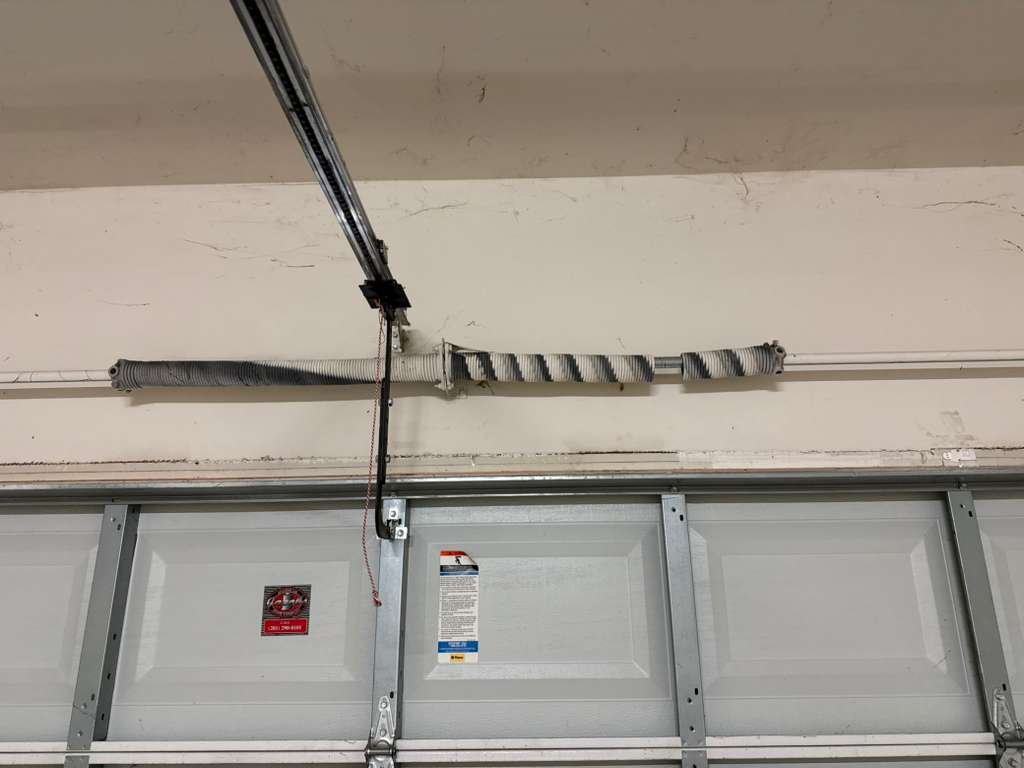
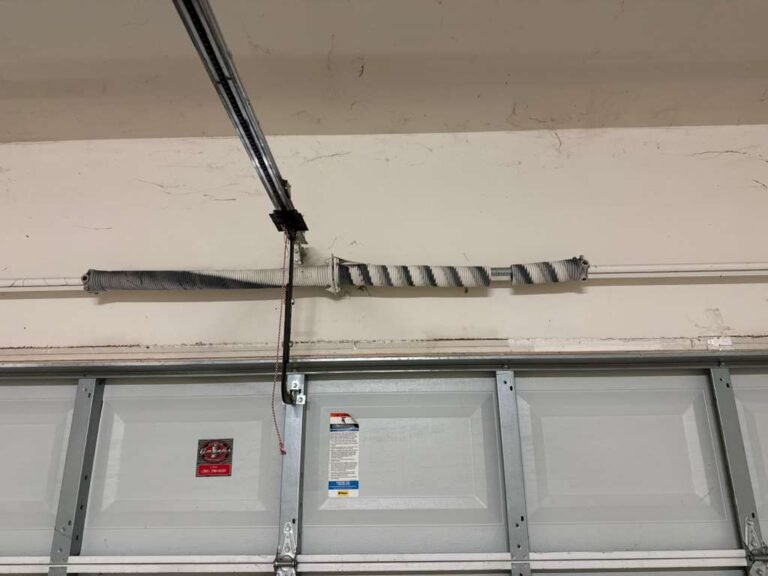
There’s a gap in the coil
Look at the bar running along the wall above the door. A failed torsion spring shows a clean gap of an inch or two in the middle of the winding. That gap is the whole diagnosis.
The opener hums and gives up
It strains, lifts the door three or four inches, then stops or reverses. The opener is fine — it is just being asked to lift the entire door on its own for the first time.
The door is suddenly very heavy
With the opener released, a balanced door should lift with two fingers and stay where you put it. If it feels like lifting a fridge, the springs are not carrying the weight any more.
It goes up crooked
One side rises and the other lags, so the door jams in the tracks at an angle. On a two-spring door this often means one spring is gone and the other is still pulling.
The cable is hanging loose
Slack or unwound cable at either bottom corner usually follows a spring failure. It needs re-seating on the drum at the same visit, or the door will pull crooked again.
What Actually Happened
Your garage door weighs somewhere between 130 and 350 pounds depending on whether it’s a single, a double, steel or insulated. The springs — not the opener — carry almost all of that weight. A torsion spring is wound tight above the door and slowly unwinds to help lift it, then rewinds as it comes down.
Every full open-and-close is one cycle. A standard spring is built for roughly 10,000 cycles. For a family going in and out four or five times a day, that lands somewhere around the seven-year mark. Houston’s humidity doesn’t help: surface rust inside the coil makes the steel brittle, and brittle steel snaps early. When it goes, it goes all at once and usually at rest — which is why so many people hear the bang overnight and find the problem in the morning.
Please don’t try this one yourself
We’re happy to talk anyone through a sensor alignment or a remote re-pair over the phone. This is not that job. A wound torsion spring on a double door stores enough energy to break an arm or worse, and it releases all of it in an instant if a winding bar slips out of the cone.
If the door is stuck and a car is trapped inside, leave it and call. Don’t pull the red release cord while the door is partway up — with no spring tension holding it, the door can drop.
Why the Opener Isn’t the Problem
This is the most common wrong turn we see. The door stops working, the opener is the noisy motorised thing on the ceiling, so the opener gets blamed — and sometimes replaced, at considerable expense, before anyone looks at the spring.
An opener is designed to guide a door that the springs have already made almost weightless. It is not built to lift 200 pounds. When a spring breaks, the opener suddenly has the whole job and does exactly what you’d expect: it strains, hums, trips its overload, and stops. Replace the spring and the same opener normally works perfectly again. We test it before we leave either way.
Torsion or Extension?
Both turn up around Katy and Houston, and the fix is different for each.
Torsion springs
Mounted on a steel bar directly above the door opening. Most doors built in the last twenty-odd years use these — one on a single door, two on a double. They wear evenly, fail predictably, and are the safer and quieter of the two designs.
Extension springs
Long springs running parallel to the horizontal tracks on either side, stretching as the door comes down. Common on older homes. If they don’t have a containment cable threaded through the middle, a break sends the spring across the garage. If we find a set without them, we’ll say so — that’s a safety problem regardless of whether anything has failed yet.
Why We Replace Both Springs
On a two-spring door we will always recommend doing the pair, and here’s the honest reasoning rather than the sales version. Both springs were fitted on the same day and have taken exactly the same number of cycles. The one that hasn’t broken yet is not a good spring — it’s a spring at the identical point in its life as the one that just failed, and it typically goes within months.
There is a second reason that matters more day to day: a new spring and a worn one don’t pull equally. The door racks slightly on the way up, which chews through rollers, wears the tracks unevenly and puts the cables at risk of jumping their drums. Doing the pair once costs less than doing one twice and fixing the damage in between.
What We Actually Do
The visit is straightforward and we’ll narrate it as we go if you want to watch:
- Release the opener and check the door’s balance and travel by hand.
- Measure the existing spring — wire gauge, inside diameter, overall length and wind direction. Getting this wrong is the single most common mistake on a DIY or cheap-contractor spring job, and a mis-sized spring will destroy an opener.
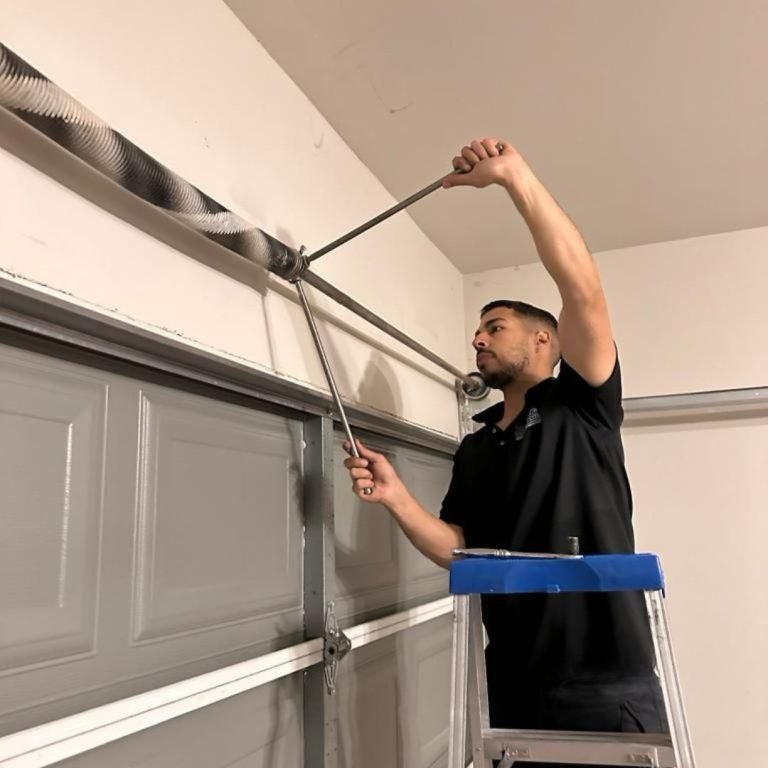
- Unwind and remove what’s left of the old spring with proper winding bars.
- Fit the correct replacement pair and wind to the right tension for your door’s weight.
- Check the cables and drums while everything is accessible, and re-seat or replace anything that has slipped or frayed.
- Balance the door so it holds still at waist height, then test the opener’s auto-reverse and the photo-eye safety sensors before we leave.
Most doors are back in service in about an hour. Because the trucks carry the common sizes, the usual job is finished on the first visit rather than booked in for a return trip — which is the difference between getting your car out this afternoon and waiting until next week.
What It Costs
The estimate is free and there is no service-call charge — a technician looks at the door, tells you what failed and what it takes to fix it, and you decide from there with a number in front of you.
We don’t publish spring prices, and we’d be sceptical of anyone who does. The figure depends on your door’s weight and the spring size it needs, whether it’s one spring or two, and whether the cables and drums survived the failure. A quoted price online is either a starting number that climbs once someone is standing in your garage, or it’s for a spring that isn’t the one your door takes.
Parts carry a 5-year warranty and our workmanship is covered for 90 days.
What This Looks Like
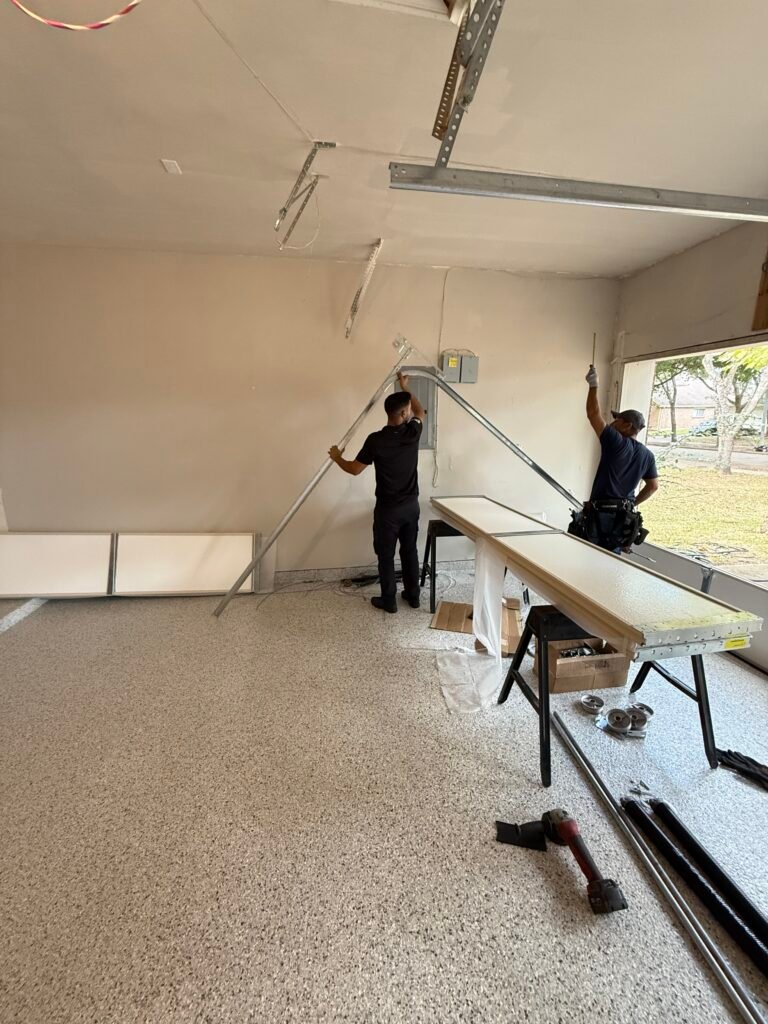
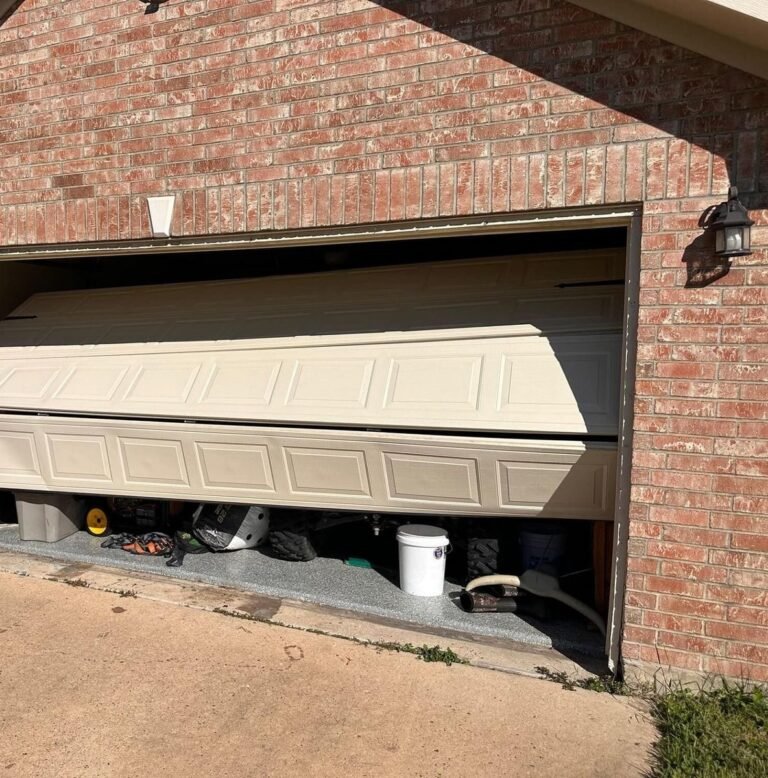
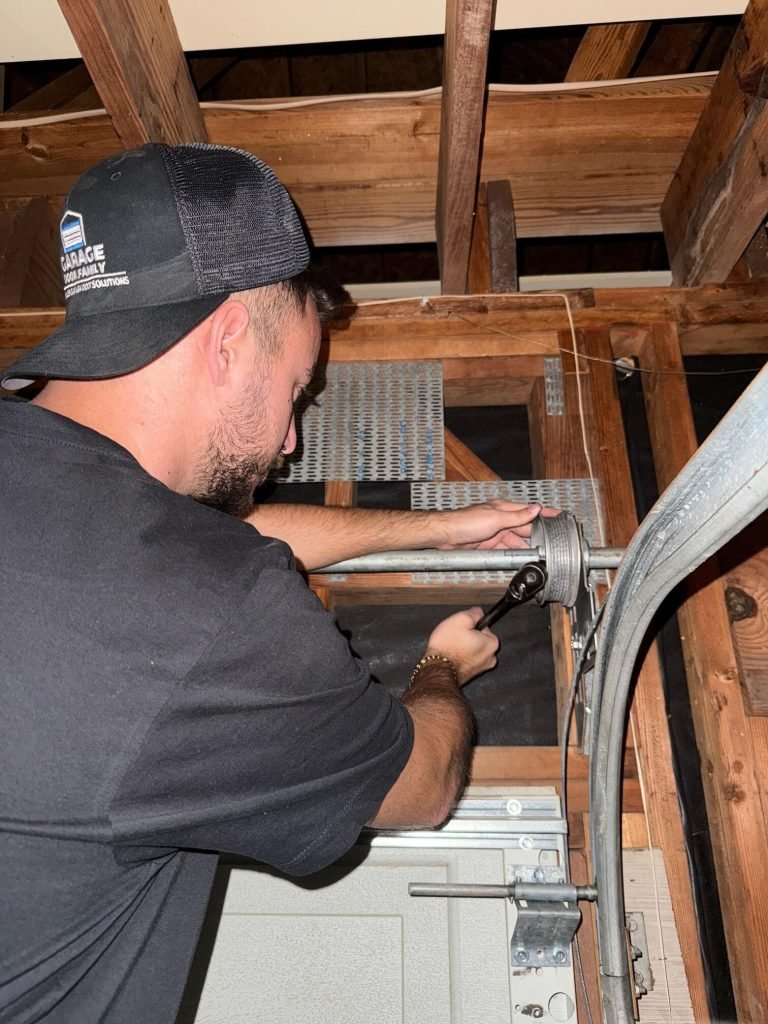
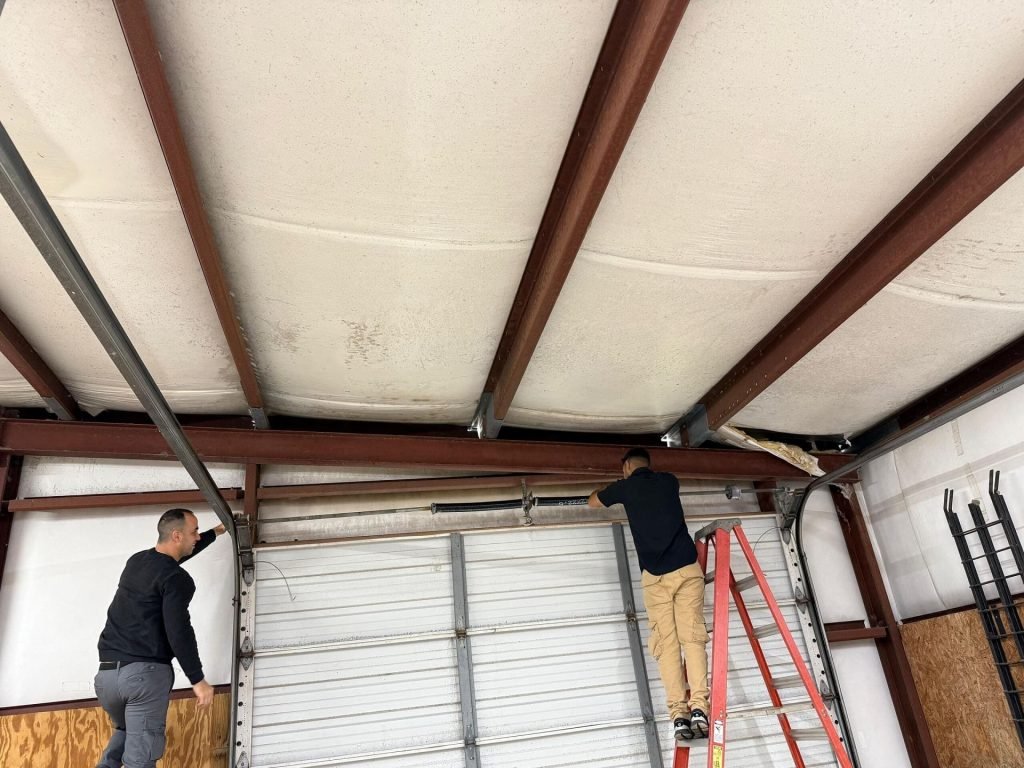
Photos from real spring and cable calls around Katy and Houston.
How the Visit Goes
You call
A person picks up, day or night. Describe what the door is doing and we’ll usually know what failed before anyone drives out.
We come out
Same day in most of the service area. The technician looks at the door and measures the spring properly.
You get a number
A firm price before any work starts. Free estimate, no service-call charge, and no obligation to go ahead.
It gets fixed
Usually about an hour. We balance the door, test the safety reverse, and clear up after ourselves.
5.0 on Google
“Thanks for coming very fast, tech Izzy replaced the spring cables and drums in less than an hour price was reasonable thanks guys, would recommend to friends and family in Katy area”
Google review · Katy, TX
“Yoel came out on a Sunday about an hour after I called. My garage door was stuck halfway open and he fixed the problem in about 45 minutes. He was professional, quick, and knew exactly what he was doing. The price was very reasonable. Now my garage closes properly again and my family feels safe. Highly recommend.”
Google review
“Amazing service. They were able to identify the problem that another company couldn’t. Awesome job!”
Google review
Spring Questions We Get Daily
+How do I know if my garage door spring is broken?
Look at the bar above the door. A torsion spring that has failed will have a visible gap of an inch or two in the middle of the coil. The other giveaways are a loud bang from the garage with nothing obviously wrong afterwards, an opener that hums and strains but only lifts the door a few inches, and a door that is far too heavy to lift by hand.
+Can I replace a garage door spring myself?
We strongly advise against it. A torsion spring on a standard double door holds enough stored energy to break bones, and it releases all of it at once if a winding bar slips. The bars, the correct spring size and the technique are all specific to the job.
This is the repair we would tell our own family not to attempt.
+Do both springs need replacing if only one broke?
On a two-spring door, yes, and we will always recommend it. Both springs were fitted on the same day and have taken the same number of cycles, so the second one is at the same point in its life as the one that just failed.
Replacing one means paying for the same call-out again in a few months, and a mismatched pair pulls the door unevenly.
+How long does a spring replacement take?
Most doors are done in about an hour. That covers unwinding what is left of the old spring, fitting the correct replacement, re-tensioning, balancing the door and testing the opener’s safety reverse. Our trucks carry the common sizes, so the usual job is finished on the first visit rather than booked in for a return trip.
+Is my opener broken too?
Usually not. The springs do almost all the lifting on a garage door; the opener only guides it. When a spring goes, the opener is suddenly being asked to lift the door’s full weight on its own, so it strains, hums, or gives up entirely. It normally works fine again once the spring is replaced. We test it before we leave either way.
+Do you charge to come out and look?
No. The estimate is free and there is no service-call charge. A technician looks at the door, tells you what failed and what it takes to fix it, and you decide from there.
Broken Spring? Don’t Force the Door.
Call and describe what it’s doing. Free estimate, no service-call charge, same-day in most of the area.
Where We Come Out To
We work out of Katy and cover the metro from Cinco Ranch and the Grand Parkway east through the Energy Corridor into Houston, and south into Sugar Land and Richmond. If you’re not sure whether you’re in range, call and ask — it’s a ten-second answer.