
Belt vs Chain vs Direct Drive: Which Opener Do You Actually Need?
There’s one question that decides this, and it isn’t about horsepower. Most Houston homes genuinely don’t need the expensive one — here’s how to tell if yours does.
Every opener does the same job: it moves the door up and down and holds it where it should be.
Worth getting one thing straight before anything else, because a lot of sales patter depends on you not knowing it. The opener isn’t what lifts your door. The springs do that. A properly balanced two-car door can be lifted with two fingers, and the opener is really just guiding something already weightless. Which means none of these three is meaningfully “stronger” than the others for a normal residential door, and horsepower is close to a marketing number.
So the choice comes down to noise, space, and money.
The One Question That Decides It
Is there a room above or beside the garage that someone uses?
That’s it. That’s the decision.
- Yes — a bedroom over the garage, an office on the other side of the wall, a conversion. Get a belt drive, or a wall-mount if there’s a reason to.
- No — detached garage, or nothing above it but attic and roof. Get a chain drive and keep the difference.
Everything below is detail on top of that.
Chain Drive
A metal chain, much like a bicycle chain, pulls the trolley along the rail.
Chain drives have a reputation as the cheap old noisy option, and the noisy part is fair — metal links running along a metal rail make a clatter, and the rail transmits it into the structure of the house. The rest of the reputation isn’t deserved. They’re reliable, thoroughly proven, cheaper to buy, and cheaper to repair when something does go.
A lot of Houston-area houses have the garage detached, or attached with nothing above it but roof space. In those houses a chain drive isn’t a compromise, it’s the right answer — you will not hear it from inside the house, and the money is better spent elsewhere.
Belt Drive
Same layout, same rail, same trolley — but a reinforced rubber belt instead of a chain. No metal-on-metal, so noticeably quieter and with much less vibration going into the ceiling joists.
This is the right buy when there’s living space above or beside the garage. In the newer Katy and west-Houston subdivisions, a bedroom or a game room over the garage is extremely common, and in those houses the difference between a chain and a belt at 6:30 in the morning is the difference between waking someone and not.
The honest caveat, which you won’t often see written down: if there’s nothing above your garage, you are paying for quiet you will never benefit from. That’s the most common upsell in this trade. We’d rather tell you now than sell it to you.
Direct Drive (Wall-Mount / Jackshaft)
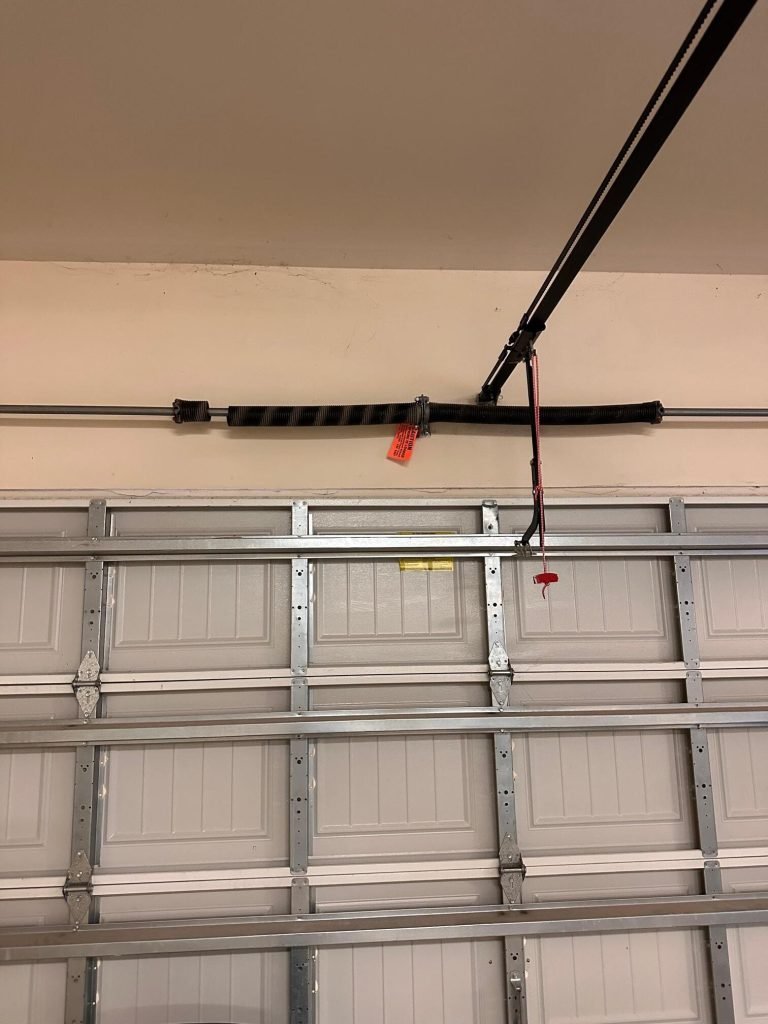
Different animal. There’s no rail and nothing on the ceiling — the unit bolts to the wall beside the door and turns the torsion shaft directly.
Two real reasons to choose one:
- Low headroom. If there isn’t enough clear space above the door for a rail, a wall-mount is often the only thing that will fit. This comes up constantly on the alley-loaded townhouse garages around inner-loop Houston, where four inches of headroom is a normal find.
- You want the ceiling back. No rail, no motor overhead — the whole ceiling is free for storage racks or a car lift.
They’re also the quietest of the three, because there’s no trolley travelling along a rail and nothing vibrating against the joists. They cost the most. If you have normal headroom and no plans for the ceiling, a belt drive gets you most of the quiet for less.
What Actually Matters More Than Drive Type
Two features are worth more attention than the belt-versus-chain argument:
Battery backup
Worth thinking about seriously on the Gulf Coast. Storm season takes the power out, and without a backup the only way to open the door is the manual release cord — fine if you’re home, awkward if you’re not. Some states now require battery backup on new opener installations for exactly this reason. Whether it’s worth it for you depends on how often your street loses power and whether the garage is your main way in and out.
Surge protection
Underrated here. The logic board is the part that most often dies in a Houston opener, and lightning and grid surges in storm season are a big part of why. A surge protector on the outlet is cheap next to a board.
The Short Version
- Room above the garage? Belt drive.
- Low headroom, or you want the ceiling clear? Wall-mount direct drive.
- Neither? Chain drive. Spend the difference on something you’ll notice.
If you’re not sure which describes your garage, that’s a thirty-second conversation on the phone rather than an appointment. More on what we do with openers is on the opener repair and installation page.
Opener Questions We Get Daily
+What is the difference between belt, chain and direct drive garage door openers?
All three do the same job and differ only in how they move the trolley along the rail. A chain drive pulls it with a metal chain, like a bicycle chain. A belt drive uses a reinforced rubber belt instead. A direct drive, sometimes called a jackshaft or wall-mount unit, has no rail at all — the motor mounts on the wall beside the door and turns the torsion shaft directly. The lifting is done by the springs in every case, so none of the three is meaningfully stronger than the others for a normal residential door.
+Is a belt drive garage door opener worth the extra money?
It is worth it in one specific situation: there is a bedroom, office or living space directly above or next to the garage. A belt drive is noticeably quieter because a rubber belt does not have metal links slapping against a metal rail. If your garage is detached, or sits under nothing but roof space, a chain drive does the identical job for less and you will not hear the difference from inside the house. Paying for quiet you cannot benefit from is the most common upsell in this trade.
+Are chain drive garage door openers still good?
Yes. Chain drives have a reputation for being noisy and old-fashioned, and the noise part is fair, but they are reliable, well-proven and cheaper to buy and to repair. A modern chain drive from a decent manufacturer is a perfectly good opener. Plenty of Houston homes have the garage detached from the living space or with only attic above, and in those houses a chain drive is the sensible choice rather than a compromise.
+What is a jackshaft or wall-mount opener?
It is a direct drive unit that mounts on the wall to the side of the door and drives the torsion shaft, instead of hanging from the ceiling on a rail. It exists for two reasons. First, low headroom — if there is not enough clear space above the door for a rail, a wall-mount is often the only option, which comes up on alley-loaded townhouse garages in Houston. Second, ceiling space: with no rail and no motor overhead you get the whole ceiling back for storage or a lift.
+Which garage door opener is quietest?
Direct drive wall-mount units are generally the quietest, because there is no rail, no trolley travelling along it and no motor unit vibrating against the ceiling joists. Belt drive comes next and is quiet enough for almost anyone. Chain drive is the loudest of the three. If the room above the garage is a bedroom, either of the first two solves the problem; the wall-mount also removes the vibration that travels through the ceiling structure, which is sometimes the part people actually notice.
+Do I need a garage door opener with battery backup?
It is worth thinking about seriously on the Gulf Coast. Storm season takes power out, and without a backup the only way to open the door is the manual release cord — which is fine if you are home and awkward if you are not. Battery backup has been required on new opener installations in some states for exactly this reason. Whether it is worth it for you depends on how often your street loses power and whether the garage is your main way in and out.
+How long does a garage door opener last?
Usually somewhere between ten and fifteen years, though it depends far more on use than age, in the same way springs do. What normally fails first is the drive gear inside the motor housing, a sprocket, or the logic board — and around Houston, boards take a beating from lightning and power surges in storm season. An opener that is fifteen years old and still working does not need replacing on principle, but it is worth knowing that parts for older models get harder to find.
+Can I keep my existing rail and just replace the motor?
Sometimes, but it is usually not worth it. Manufacturers change rail and trolley designs between generations, so a new motor often will not mate to an old rail, and where it does you are pairing a new unit with worn parts that are the same age as the thing that just failed. If the opener is old enough that the motor has gone, replacing the whole unit generally costs little more once labour is counted and resets the clock on everything.
Want a Straight Recommendation?
Including when the cheaper one is the right one. Free estimate, no service-call charge, and no pressure to go ahead.