Garage Door Repair in Houston, TX
Tell us what the door is doing and we’ll usually know what broke before anyone drives out. Springs, cables, rollers, openers and sensors ride on the truck, so most doors are working again the same day.
What Is the Door Doing?
Find the one that sounds like yours. It’s usually enough to know what you’re dealing with before you call.
Loud bang, now it won’t open
A spring let go. The opener hums, strains, lifts the door a few inches and stops, because it is suddenly trying to lift the whole door on its own. Most common failure there is. Broken spring repair →
The door hangs crooked or jams
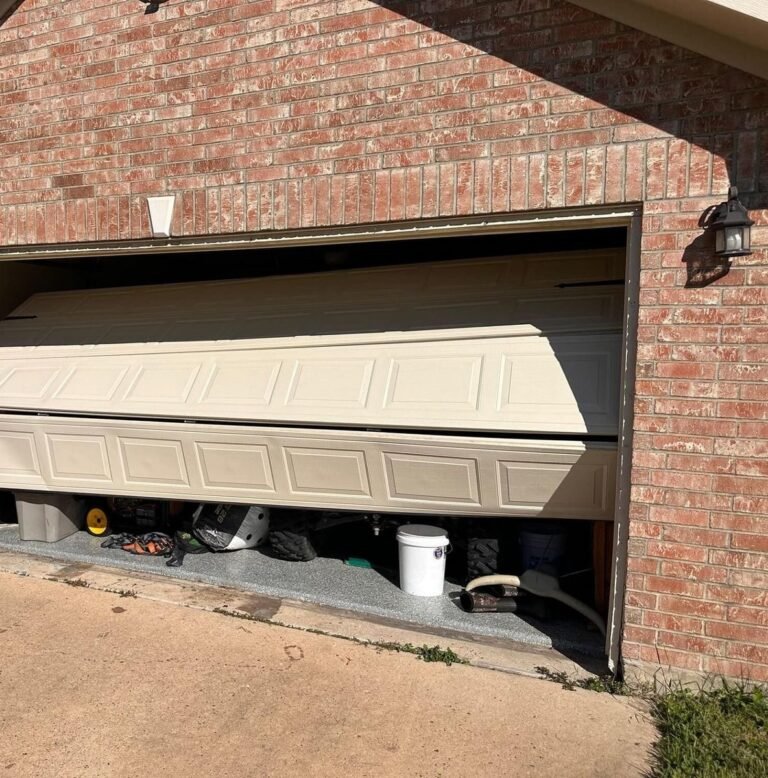
One side higher than the other, or the door wedged at an angle in the tracks. Stop pressing the button — every attempt bends panels that are still fine right now. Off-track repair →
A cable is hanging loose
Slack or unwound cable at a bottom corner, usually after a spring failure or a door that ran down onto an obstruction. The cable has to go back on the drum before the door is safe to run. Cable & drum repair →
Nothing happens at all
No hum, no movement, remote dead, wall button dead. That one usually is the opener — a stripped gear, a failed capacitor, or a logic board that has had it. Opener repair →
It starts down, then reverses
Almost always the two safety eyes near the floor. Wipe both lenses and clear whatever is parked in front of them — that fixes it about half the time, for free. Sensor faults →
Grinding, banging, shaking the house
Worn rollers, dry hinges or loose track bolts. Not an emergency this week, but it is a door wearing itself out and it is a cheap fix compared with what it turns into.
The Five Things That Actually Break
A garage door looks complicated and isn’t. It’s a few hundred pounds of steel hanging on two tracks, balanced by springs, guided by an opener that does far less work than people assume. When one fails, it is nearly always one of five parts — and four of them are cheap compared with the door.
1. Springs
The part under load every second of its life, and the one that fails suddenly. Springs are rated in cycles, not years — roughly 10,000 opens and closes for a standard set. A family in and out four or five times a day gets somewhere around seven years out of that. When one goes it makes a bang loud enough to wake the house, and the door becomes dead weight. More on spring repair →
2. Cables and drums
Steel cable runs from the bottom bracket up to a grooved drum on the spring shaft. It frays, or it jumps the groove when a spring breaks or the door lands on something. The tell is a door that pulls to one side and slack cable coiling at the corner. More on cable and drum repair →
3. Rollers, hinges and tracks
The cheap parts, and the ones nobody thinks about until the door sounds like a freight train. Nylon rollers wear their bearings out, steel ones seize, and a worn roller lets the door wander until it comes out of the track altogether. More on off-track repair →
4. The opener
Blamed constantly, guilty occasionally. Real opener faults look like a stripped drive gear, a motor that hums without turning, a dead logic board after a lightning storm, or a chain gone slack enough to skip. More on opener repair and replacement →
5. Safety sensors
The two eyes a few inches off the floor. They have to see each other or the opener refuses to close, and it tells you so by blinking its light. A knocked bracket, a dusty lens or a trash can left in the beam is the cause more often than a failed sensor.
That is the list for a house. A business door is a different animal — rolling steel curtains, heavier sectional doors on a dock or a shop, different springs and a door that costs money every hour it sits stuck. We work on those alongside residential. More on commercial door repair →
While you’re waiting for us
Stop pressing the button. If the door is jammed, crooked or half open, every attempt drags it further out of line and starts bending panels that were fine a minute ago. That is the single thing that most often turns a repair into a replacement.
Don’t pull the red release cord on a partly open door. With no spring tension holding it, the door can drop. If a car is shut in, leave it and call — we get people’s cars out for a living and it is not worth a broken foot.
Repair or Replace?
We get asked this on nearly every call, usually by someone bracing for a four-figure answer. Most of the time the honest answer is repair, and here’s the reasoning rather than the sales version.
Springs, cables, rollers and openers are wear parts on a structure that lasts decades. The panels, the tracks and the frame are what make a door expensive, and they are usually untouched by the failure that brought you here. Replacing a wear part costs a fraction of a new door and buys years.
Replacement genuinely makes sense in three cases: a bottom section crushed by a car, steel that has rusted through from the bottom up, or a wooden door with rot in the stiles. In those cases we will say so, and we will say it before you have paid for a repair that props up a door on its way out. New door installation →
Why Houston Doors Fail When They Do
Two things about this metro show up in the work. The first is humidity. Bare spring steel picks up a film of surface rust in a garage that swings between damp mornings and 100°F afternoons, and rusty steel is brittle steel — it snaps early, often well short of its cycle rating. The same air seizes roller bearings and stiffens hinges.
The second is timing. Great swathes of west Houston — Katy, Cinco Ranch, Cypress, Fulshear, the Energy Corridor — went up in one long building boom, so entire streets got their doors within a couple of years of each other. Those doors are now well past the ten-thousand-cycle mark together. When a neighbor mentions their spring went last month, that is not a coincidence, and it is a decent hint to check yours before it strands a car.
What It Costs
The estimate is free and there is no service-call charge. A technician looks at the door, tells you what failed and what it takes to fix it, and you decide with a firm number in front of you. If you would rather not go ahead, there is nothing to pay for the visit.
We don’t publish repair prices, and we’d be wary of anyone who does. What a job costs depends on which part failed, how heavy your door is and what size part it takes — a number quoted down the phone before anyone has seen the door is either a guess or a starting figure that climbs once someone is standing in your garage.
Parts carry a 5-year warranty and our workmanship is covered for 90 days.
Recent Work
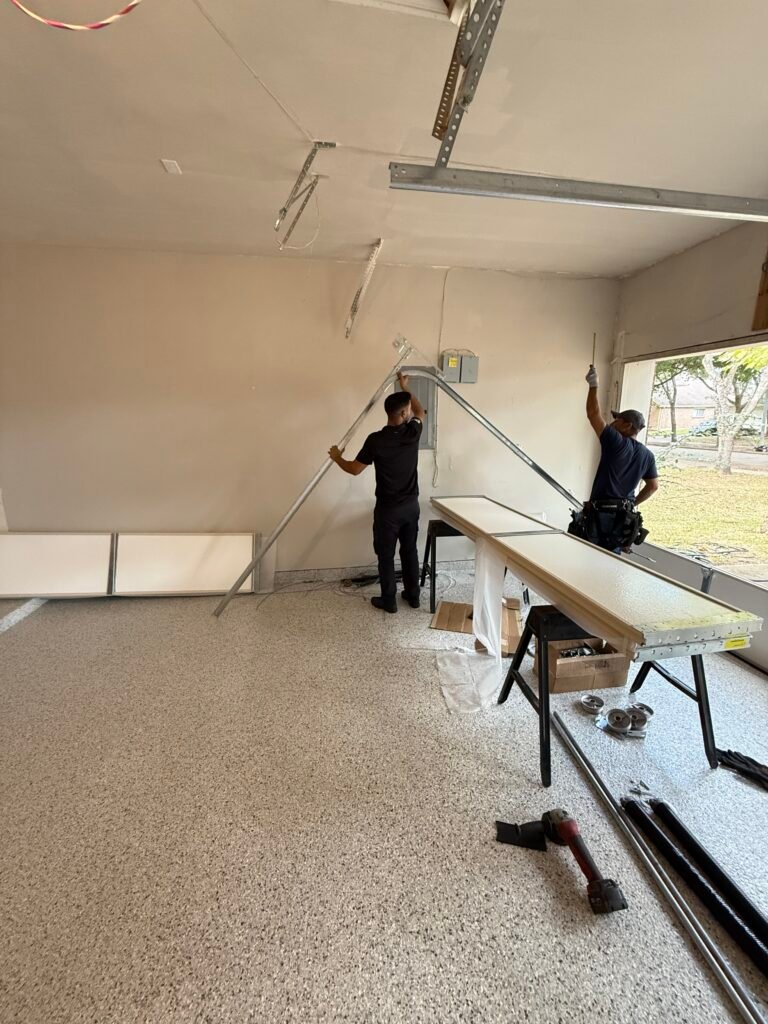
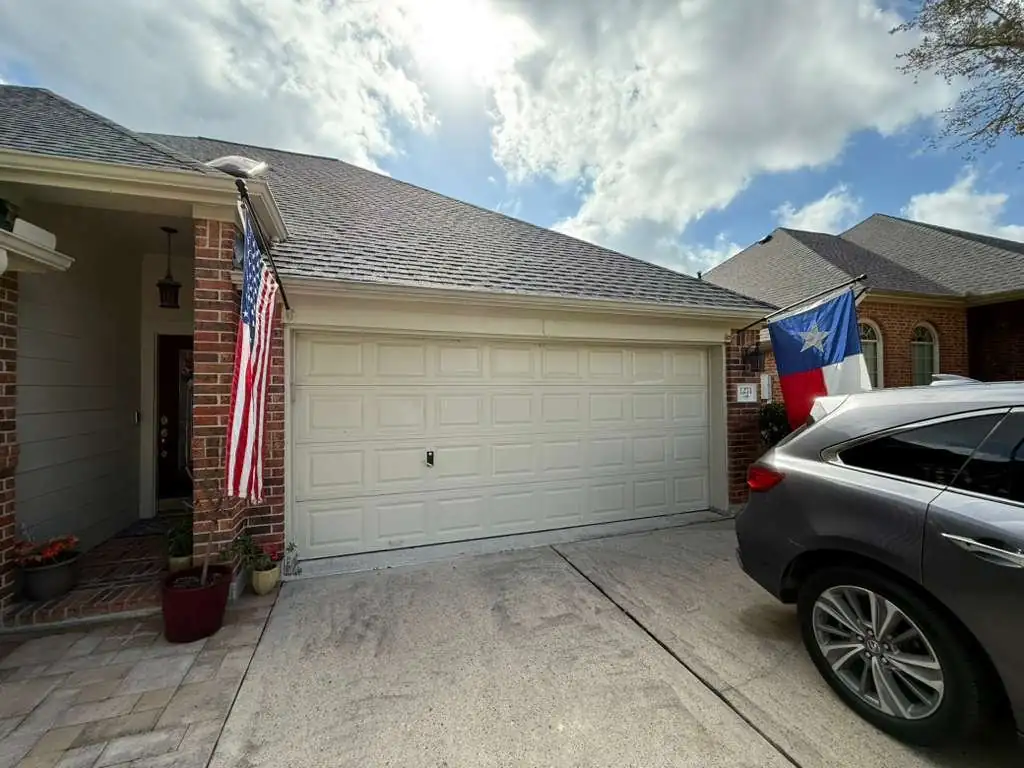
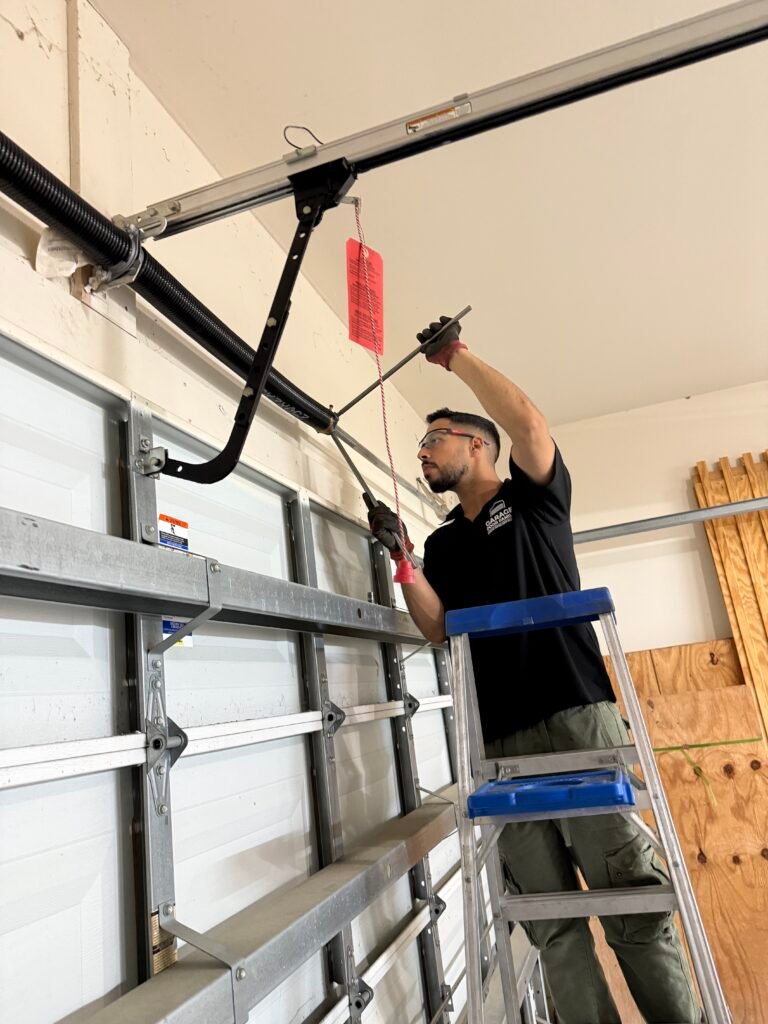
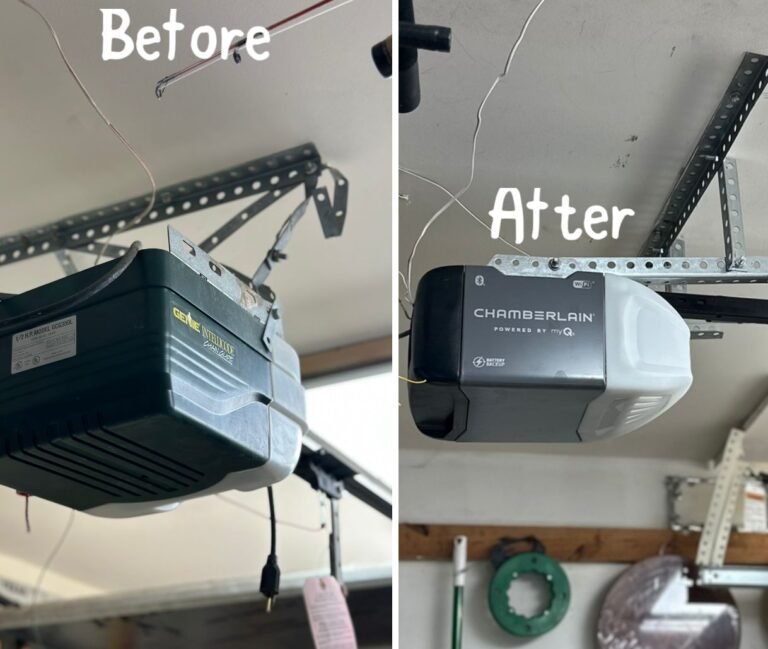
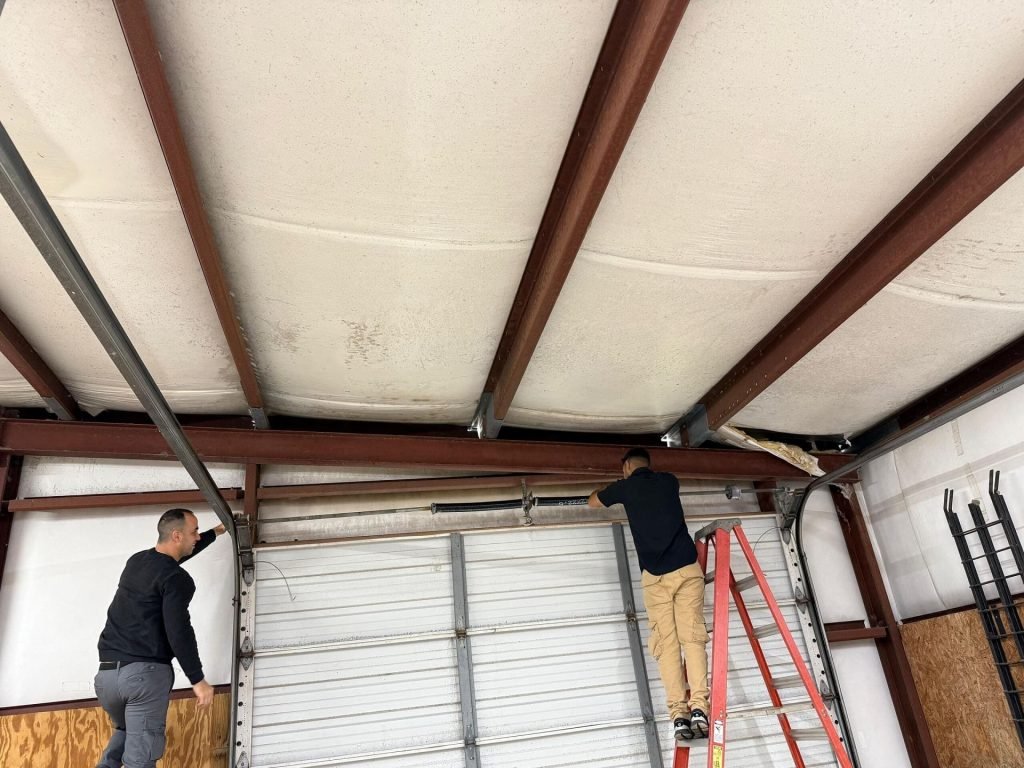
Real calls around Houston and Katy — not stock photography.
How the Visit Goes
You call
A person picks up, day or night. Describe the noise and where the door stops — we’ll usually name the part on the phone.
We come out
Same day in most of the area. The technician runs the door, checks the balance, and finds what actually failed rather than what is easiest to sell.
You get a number
A firm price before any work starts. Free estimate, no service-call charge, no obligation to go ahead.
It gets fixed
Usually the same visit, because the parts are already on the truck. We balance the door, test the safety reverse, and clear up after ourselves.
5.0 on Google
“Yoel came out on a Sunday about an hour after I called. My garage door was stuck halfway open and he fixed the problem in about 45 minutes. He was professional, quick, and knew exactly what he was doing. The price was very reasonable. Now my garage closes properly again and my family feels safe. Highly recommend.”
Google review
“Thanks for coming very fast, tech Izzy replaced the spring cables and drums in less than an hour price was reasonable thanks guys, would recommend to friends and family in Katy area”
Google review · Katy, TX
“Amazing service. They were able to identify the problem that another company couldn’t. Awesome job!”
Google review
Repair Questions We Get Daily
+What breaks most often on a garage door?
Springs, by a wide margin. They are the only part of the door under constant load, they are rated in cycles rather than years, and they fail suddenly.
After springs it is cables slipping their drums, worn rollers letting the door drift out of its track, and safety sensors knocked out of alignment. The opener itself is blamed far more often than it actually fails.
+Can you come out the same day?
Most of the time, yes, across Houston and Katy. The trucks carry springs, cables, drums, rollers and sensors, so the common failures are fixed on the first visit instead of waiting on a parts order.
If a car is shut in or the door is stuck open and you can’t leave the house like that, say so when you call and we’ll move you up the list.
+Is it worth repairing, or should I replace the whole door?
Most doors are worth repairing. Springs, cables, rollers and openers are wear parts on a structure that lasts decades, and replacing them costs a fraction of a new door.
Replacement makes sense when the panels themselves are the problem: a bottom section crushed by a car, rusted-through steel, or rot in a wooden door. We’ll tell you which one you have — and we’ll say so if the repair is the better buy.
+Do you charge to come out and diagnose it?
No. The estimate is free and there is no service-call charge. A technician looks at the door, tells you what failed and what it takes to fix it, and you decide with a firm number in front of you. If you’d rather not go ahead, there is nothing to pay for the visit.
+Do you repair openers as well as doors?
Both, including Chamberlain, LiftMaster and Genie, plus remotes, keypads, safety sensors and worn drive units.
Worth knowing before you buy a new opener: a large share of “the opener is dead” calls turn out to be a misaligned sensor, a snapped gear, or a broken spring making the motor strain. We check which it is before recommending a replacement.
+Do you answer at night and at weekends?
Yes, around the clock, weekends and holidays included. A garage door stuck open is a house left open, so that isn’t a call worth holding until morning. A person answers rather than a machine.
+Do you work on commercial doors?
Yes, alongside residential. Commercial doors vary far more than residential ones, so tell us what the door is and where it is when you call and we’ll know what to bring before anyone drives out.
+Is the repair covered by a warranty?
Five years on parts, ninety days on workmanship. If a part we fitted fails inside five years, the replacement part is covered. The ninety days covers how it was fitted — if something isn’t right, we come back and put it right.
Tell Us What the Door Is Doing.
One call, a straight diagnosis, and a price before anything starts. Free estimate, no service-call charge, same-day in most of the area.
Request a Callback
Send your details and we’ll get back to you. Prefer to talk it through now? Just call.
Where We Come Out To
We work out of Katy and cover the metro from Cinco Ranch and the Grand Parkway east through the Energy Corridor into Houston, north to Cypress and Magnolia, and south into Sugar Land and Richmond. If you’re not sure whether you’re in range, call and ask — it’s a ten-second answer.