Garage Door Repair in League City, TX
You’re in windstorm country and a few miles from the bay. That changes two things about your garage door: how fast the hardware corrodes, and what it takes for a replacement to count with your insurer.
What Goes Wrong Here
The same doors fail here as anywhere else. They just fail sooner, and one of them fails in a way the rest of the metro never has to think about.
Salt in the bearings
Bay air carries salt inland every day of the year. Rollers, hinges, bearing plates, cable drums and the springs themselves corrode years faster here than the identical door does in Katy.
Springs that rust before they cycle out
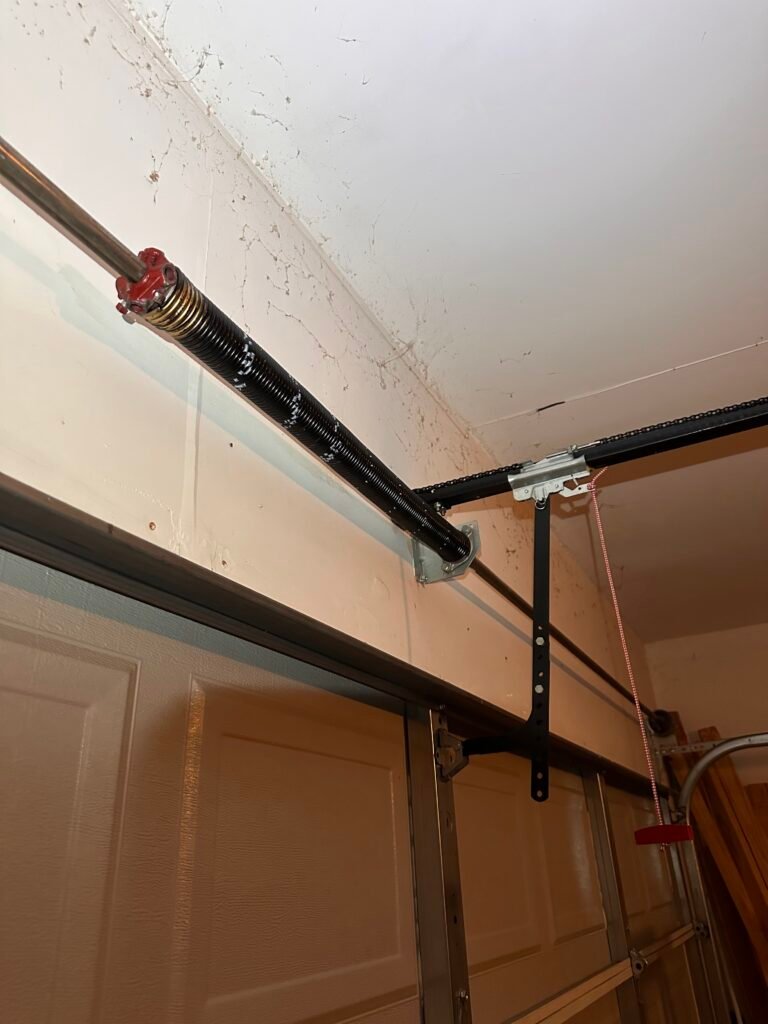
A spring is rated in cycles, about 10,000. On the coast it often doesn’t get there — corrosion pits the wire and it lets go early. A spring that broke at seven years wasn’t worn out, it was eaten. Spring repair →
Bottom sections and bottom brackets
The lowest foot of the door is where salt, damp and grit collect. That’s where the rust starts, and the bottom bracket is the one piece of hardware you never want to find corroded — it’s under full cable tension.
Doors that took a storm and kept going
Wind loads a door in and out even when it holds. A bowed track, a section pushed out of line at the opener bracket, flat spots on rollers — the door still works, roughly, and it wears everything out fast.
Un-braced replacement doors
A wind-rated door is only wind-rated if it was fitted with the bracing and anchors the manufacturer specified. We’ve seen the struts left in the packaging more than once. It looks identical from the driveway.
Dead boards after a supply swing
Storm season is hard on opener electronics. Light works, wall button does nothing, motor silent — that’s usually the logic board rather than the motor. Opener repair →
Why the Garage Door Is the Storm Question
It’s the largest opening in most houses and it’s the one most likely to give. That matters more than it sounds. Once wind is inside the building it has to go somewhere, and where it goes is up against the underside of the roof. A house that loses its garage door in a storm often doesn’t just lose a door.
That is the entire reason wind-rated doors exist, and the reason their bracing is not decorative. A rated door is a system: the door sections, the struts across them, the track, the brackets and the anchors into the jamb, all tested together. Fit it without the struts and you have a normal door that came in a box with a sticker on it.
Windstorm Certification, in Plain English
League City sits in Galveston County, which is inside the Texas Windstorm Insurance Association’s seacoast area. In practice that means new or replaced exterior openings get certified, not just installed. For a garage door that usually looks like this:
- A door with a wind-load rating appropriate to this zone, rather than whatever is stacked at the builders’ merchant.
- Installation to the manufacturer’s spec — the specified struts, track gauge, brackets, and the specified anchors into the jamb, not near-enough substitutes.
- A WPI-8 certificate issued off an inspection, which is the piece of paper your insurer actually wants to see.
Your agent is the one to confirm what your policy needs — requirements change and we are not going to tell you what your own insurance requires. What we will do is ask the question before anything is ordered, because it decides which door goes on the house. Finding out afterwards is expensive.
Salt Does the Rest
The everyday problem here isn’t hurricanes, it’s the air. You’re a few miles from Galveston Bay and salt lands on plated steel every day whether there’s weather or not. Rollers, hinges, bearings, drums, bottom brackets and springs all go earlier than the same parts inland. Nearer the water — South Shore Harbour, out toward Clear Lake and Kemah — earlier still.
Two practical consequences. First, doors here want looking at sooner than the manual suggests; the interval that suits Katy is optimistic on the coast. Second, when parts do get replaced it is worth going up a grade rather than fitting the cheapest equivalent. Better rollers and galvanised hardware cost a little more once and save a call-out you’d otherwise make two years early.
What you can do yourself is unglamorous and it works: rinse the door and the bottom track down with fresh water now and then, especially after a blow, and keep the bottom seal seated so salt and grit aren’t sitting in the track. Don’t grease the tracks. Grease holds grit, and grit is what chews rollers.
After a storm, look before you run it
Check the track for a bow and the top section for a bend around the opener bracket before pressing anything. A door that was pushed by wind and then driven by an opener is how one bent part becomes three.
Stop pressing the button on a door that’s jammed or crooked. Every attempt drags it further out of line. The panels are usually still fine when people call and not always still fine an hour later.
What Fails, and In What Order
- Springs — the bang, then a door that won’t lift. On the coast, as often corroded as worn out. Spring repair →
- Cables and drums — slack cable at a bottom corner and a door pulling crooked. Cable is stranded steel and salt gets into every strand. Cable and drum repair →
- Rollers, hinges and track — noise first, a door out of its track later. Off-track repair →
- Openers — boards after storm season, stripped gears, remotes and keypads. Battery backup is worth more here than most places. Opener repair →
- Safety sensors — the door that starts down then reverses, with a blinking light telling you why. Often a lens wipe and something moved out of the beam.
What It Costs
The estimate is free and there is no service-call charge, and that holds down here the same as it does in Katy. A technician looks at the door, tells you what failed and what it takes to fix, and you decide with a firm number in front of you.
We don’t publish repair prices. On a coastal door in particular the honest answer is that nobody can quote it blind — the difference between one corroded roller and a bottom bracket that has to come off under tension is not a difference you can guess at over the phone. A firm number quoted before anyone has seen the door is either a guess or a starting figure that climbs.
Parts carry a 5-year warranty and our workmanship is covered for 90 days.
Our Own Work
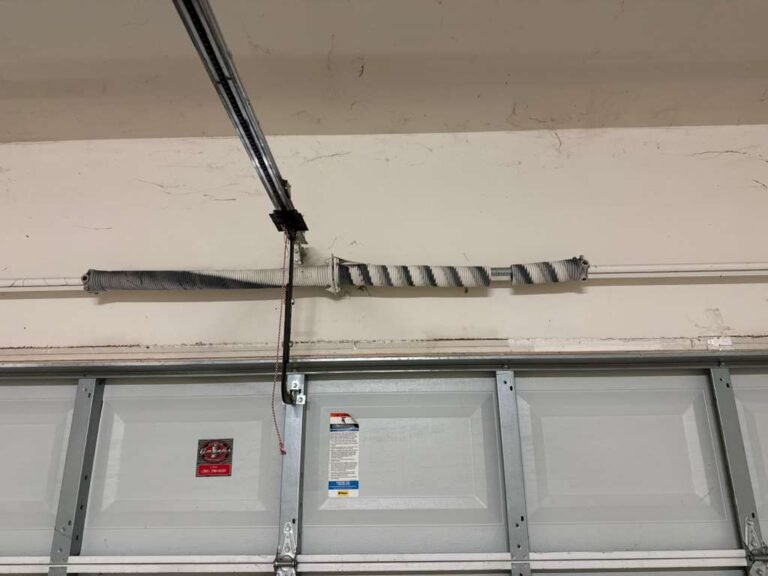
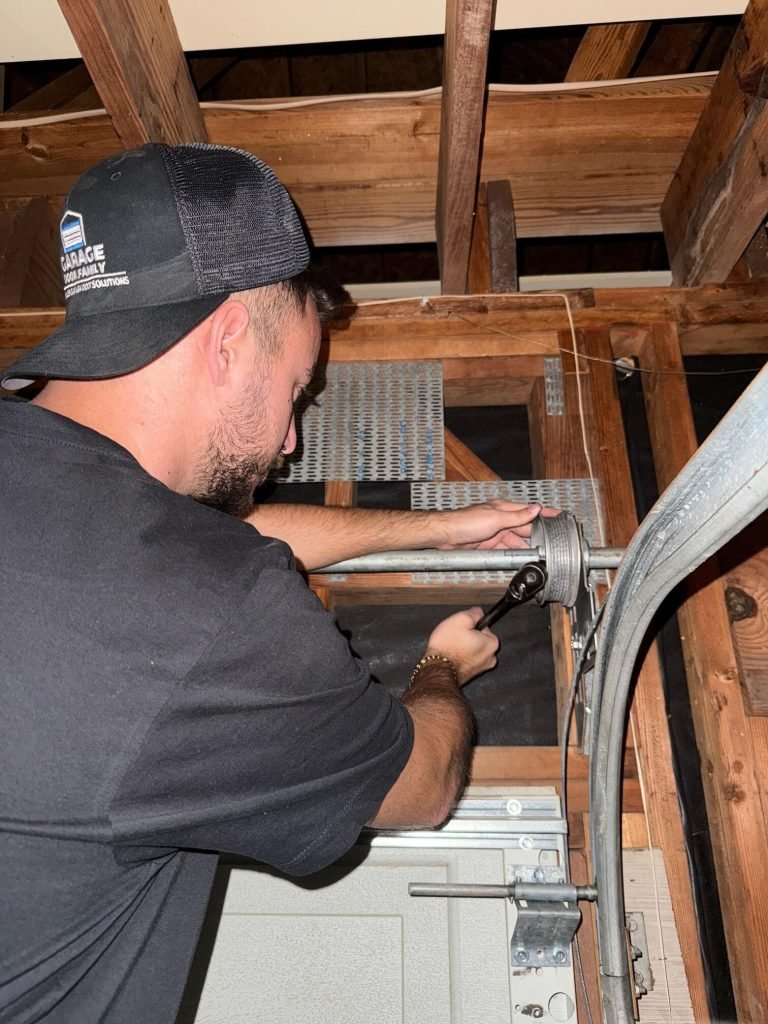
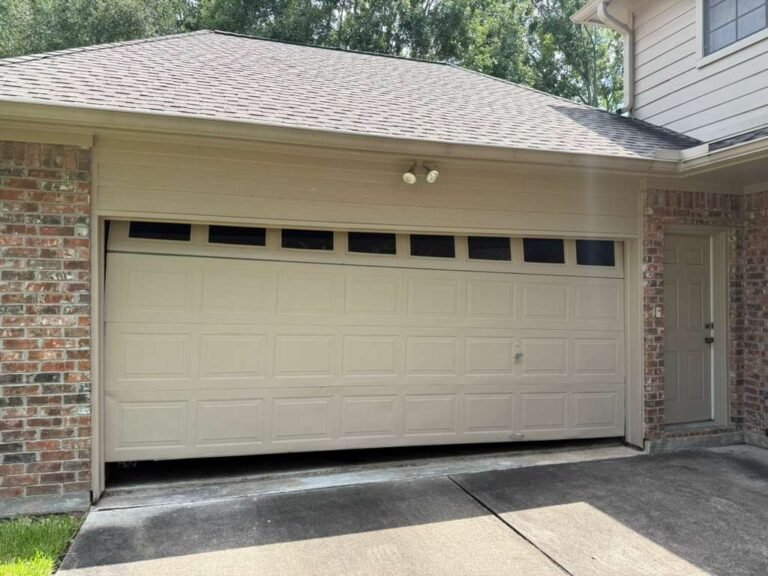
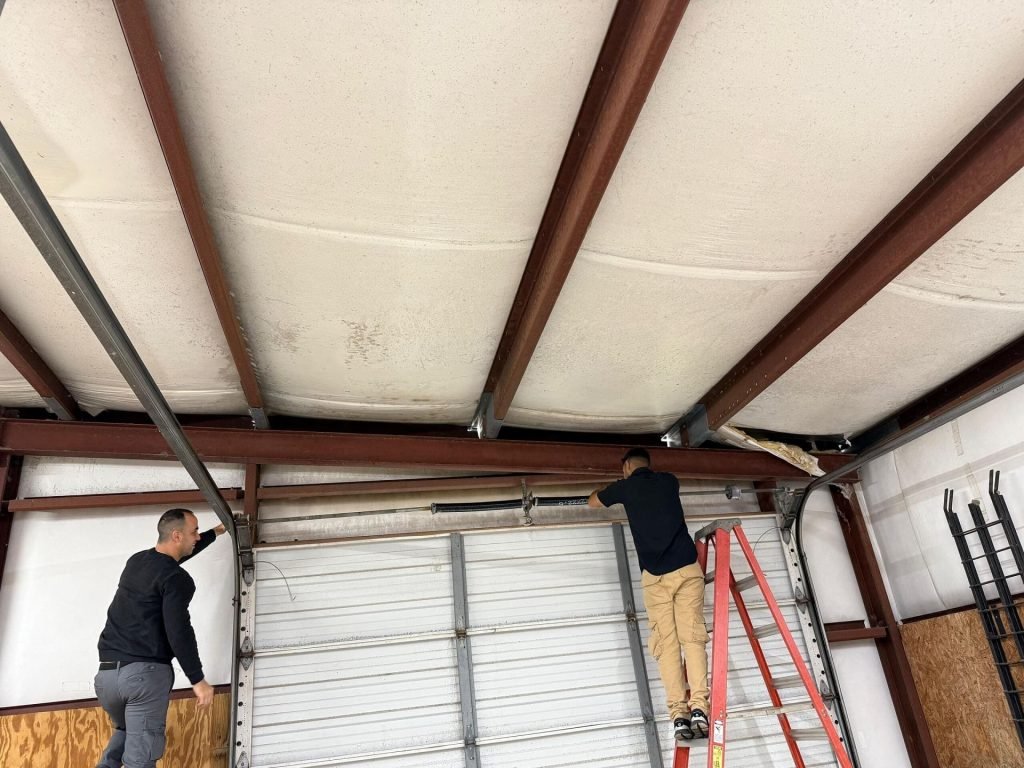
Photos from our own calls around the metro. Nothing here came from a stock library.
How the Visit Goes
You call
A person picks up, day or night. Say what the door is doing and roughly where in League City you are.
We come out
Same day for most calls. It’s about an hour from the office in Katy, so we plan the run rather than pretend it’s around the corner.
You get a number
A firm price before any work starts. Free estimate, no service-call charge, no obligation to go ahead.
It gets fixed
Usually the same visit. We balance the door, test the safety reverse, and tell you what else is corroding before it strands you.
5.0 on Google
“Yoel came out on a Sunday about an hour after I called. My garage door was stuck halfway open and he fixed the problem in about 45 minutes. He was professional, quick, and knew exactly what he was doing. The price was very reasonable. Now my garage closes properly again and my family feels safe. Highly recommend.”
Google review
“Called Saturday morning and Tech Izzy came same day and repaired my garage door within 20 minutes. Price was affordable. I would definitely recommend this guys.”
Google review
“Amazing service. They were able to identify the problem that another company couldn’t. Awesome job!”
Google review
League City Questions
+Can you get to League City the same day?
Usually, yes, for most calls. It is about an hour from the office in Katy, so we plan the run rather than pretend it is around the corner. Tell us what the door is doing when you call and we will give you a real window. If a car is shut in or the door will not close, say so and you move up the list.
+Does a new garage door here have to be wind-rated?
If you want it to count towards your windstorm coverage, effectively yes. League City is in Galveston County, which sits inside the Texas Windstorm Insurance Association seacoast area, and new or replaced exterior openings there are certified rather than just installed. In practice that means a door with a wind-load rating for this zone, fitted with the bracing and anchors the manufacturer specifies, and a WPI-8 certificate issued off an inspection. Your agent is the one to confirm what your policy actually needs — tell us before we order, because it decides which door goes on.
+Why does the garage door matter so much in a storm?
Because it is the largest opening in most houses and the one most likely to give. Once wind is inside, the pressure has to go somewhere, and pushing up on the roof from the inside is how roofs come off. That is the whole reason wind-rated doors and their bracing exist, and it is why the bracing is not optional trim that can be left in the box.
+My hardware is rusty and the house is barely ten years old. Why?
Salt. You are a few miles from the bay and salt in the air is hard on plated steel: rollers, hinges, bearings, cable drums, bottom brackets and the springs themselves. The same door in Katy would look years younger. It is worth going up a grade on rollers and hardware when parts do get changed here, and worth having the door looked at sooner than you would inland.
+We are right on the water in South Shore Harbour. Anything different?
The same failures, sooner. The closer to open water, the more salt lands on the hardware and stays there. Keep the bottom track clear and rinse the door down with fresh water now and then, especially after a blow. Expect rollers to need changing earlier than the box says, and do not grease the tracks — grease holds grit and grit is what wears a roller.
+The door came through the storm but does not run right now. What should I look at?
Wind loads a door in and out even when it holds. Look at the track for a bow, at the top section around the opener bracket for a bend, and at the rollers for flat spots. A door that took a beating and now runs rough is usually a track and hardware job rather than a replacement. Do not keep running the opener to test it, because that is what turns one bent part into three.
+Do you charge to come out and look?
No. The estimate is free and there is no service-call charge. A technician looks at the door, tells you what failed and what it takes to fix it, and you decide with a firm number in front of you. If you would rather not go ahead, there is nothing to pay for the visit.
+Is the work covered by a warranty?
Five years on parts, ninety days on workmanship. If a part we fitted fails inside five years the replacement part is covered. The ninety days covers how it was fitted — if something is not right, we come back and put it right.
League City Door Down? We’ll Come.
Tell us what it’s doing. Free estimate, no service-call charge, and same day on most calls.
Across League City and the Bay Area
From South Shore Harbour and Bay Ridge through Tuscan Lakes, Victory Lakes, Mar Bella, Magnolia Creek, Westover Park, Brittany Lakes and Hidden Lakes, and on to Kemah, Clear Lake Shores, Dickinson, Webster and Friendswood. If you’re on the edge of that and not sure, call and ask — it’s a ten-second answer. See the whole service area →