
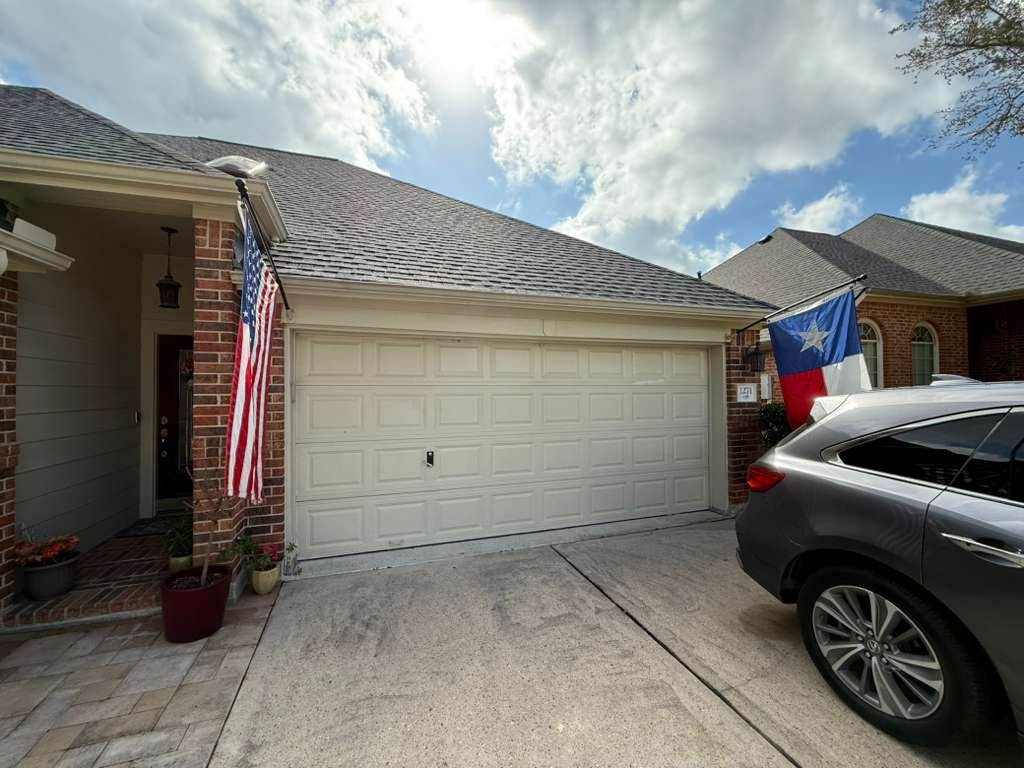
Why Garage Doors Fail in Texas Summer Heat
Sticks in the afternoon, fine again by morning? That timing is the whole diagnosis — and a genuinely broken part doesn’t usually keep office hours.
Every year, from about June, the calls change shape.
Not dramatic failures — those happen year round. It’s the intermittent stuff. A door that sticks going up. An opener that quits and then works again an hour later. Something that groans at four in the afternoon and runs perfectly at seven in the morning.
People assume it’s electrical, because it comes and goes. It usually isn’t.
The Clue Is the Time of Day
If you take one thing from this page, take this: a door that misbehaves in the afternoon and behaves in the morning has a heat problem, not a broken part.
A failing roller, a dying board, a snapped spring — none of those get better overnight and worse after lunch. A genuinely broken part doesn’t keep office hours. When the fault follows the temperature, the cause is thermal, and thermal problems are usually cheap.
It’s also the single most useful thing you can tell a technician on the phone. “It only does it in the afternoon” narrows the job before anyone leaves the yard.
Three Things Happen at Once
An August garage in Katy or Houston isn’t just uncomfortable, it’s a genuinely different operating environment from the same garage in February. Three separate things go wrong together, which is why summer faults feel strange.
1. The metal gets bigger
Steel expands as it heats. Not much — but a garage door system runs on small clearances. Tracks, rollers, hinges and the shaft all grow slightly, and a roller that had just enough room in winter can bind in a track that’s a fraction tighter in summer.
This is why a door will stop at the same point on a hot afternoon and sail past it the next morning. Nothing broke. The gap closed up.
2. The grease thins out and leaves
Lubricant is designed for a temperature range, and a 110°F garage is at the top of it. Grease in the roller bearings and hinges gets runny and migrates away from where it’s doing work.
So friction goes up at exactly the moment clearances are at their tightest. The two compound each other, and that’s the summer sticking door in one sentence.
3. The opener is sitting in the hottest air in the room
This is the one nobody mentions. Heat rises, and your opener hangs from the ceiling — so the motor and its logic board sit in the hottest layer of an already hot space. An attached Houston garage regularly runs 110–120°F up at ceiling height in August.
Consumer electronics don’t love that. Heat shortens the life of the capacitor and the board, and some units have a thermal cutout that simply stops the motor until it cools down. If your opener quits in the late afternoon and works again in the evening, suspect heat before you suspect a fault.
Storm season overlaps with all of this, and surges take out boards too — if it started the morning after a bad storm, that’s a different story. More on openers here.
The West-Facing Garage Problem
One more afternoon-only fault, and it has nothing to do with heat — just the sun.
If your garage faces west, low afternoon sun can shine straight into the receiving safety sensor and wash out its beam. The door then refuses to close, and the opener light blinks. The sensor isn’t broken; it’s dazzled. Same time-of-day signature, completely different cause, and the fix is a small shade over the sensor. The full sensor checklist is here.
What About the Springs?
Heat doesn’t break springs. Springs fail from cycles, not temperature, and a spring that goes in July was going to go about then regardless.
Summer does contribute at the margins, though. Thin lubricant on the coils means more friction between windings as they wind and unwind, which speeds up metal fatigue. Add Gulf Coast humidity and you get rust doing the same thing. And doors simply get used more when people are in and out, so the cycle count climbs faster.
Four Things Worth Doing
None of these take long and all four are safe to do yourself.
- Lubricate properly. Rollers, hinges, springs and the bearings on the shaft, with a silicone or lithium garage-door spray. Twice a year is plenty and early summer is good timing.
- Wipe the sensor lenses. Dust and spider webs cause more nuisance faults than anything else on a garage door, and it takes ten seconds.
- Check the bottom weather seal. Heat and UV make it brittle and it’s what keeps water and pests out. If it’s cracked or crumbling, it’s cheap to replace.
- Do the balance test. Release the opener, lift the door halfway by hand, let go. It should stay put. If it drifts up or falls, the springs need looking at — and that one is worth a call rather than a fix.
Would an Insulated Door Help?
For the temperature in the garage, genuinely yes. A non-insulated steel door is a large panel facing the sun that absorbs heat all afternoon and radiates it inward. An insulated door is the difference between a garage that’s unusable in August and one that’s merely warm.
For your electricity bill, the honest answer is: it depends on your layout. It matters most when there’s a room directly above the garage or the garage shares a long wall with living space, because that’s heat your air conditioning is fighting. If the garage is detached, insulation is about comfort and protecting whatever you keep out there, not about your bill.
We’re not going to tell you it pays for itself. It might, in the right house. If you’re replacing the door anyway, the insulated option is worth taking around here.
Summer Garage Door Questions
+Why does my garage door act up in summer?
Three things happen at once in a Houston August. Metal expands, so tracks, rollers and hinges that had just enough clearance in February start to bind. The grease in rollers and hinges thins in the heat and migrates away from where it is needed, so friction rises exactly when clearances are tightest. And the opener's electronics sit in an unconditioned garage that can pass 110°F, which is beyond what consumer boards are comfortable with. A door that misbehaves in the afternoon and behaves in the morning is almost always one of these rather than an electrical fault.
+Can heat make a garage door opener stop working?
Yes. An attached Houston garage in August regularly runs 110-120°F near the ceiling, which is where the opener hangs — heat rises, so the motor unit sits in the hottest air in the room. Heat shortens the life of the capacitor and the logic board, and some units have a thermal cutout that stops the motor until it cools. If your opener quits in the late afternoon and works again in the evening, suspect heat before you suspect a fault.
+Why does my garage door only stick in the afternoon?
That timing pattern is the single most useful clue you can give a technician. It points at thermal expansion rather than a failing part: the metal is at its largest and the lubricant at its thinnest in the hottest part of the day, so a marginal clearance becomes a binding one. It can also be the photo-eye sensors being dazzled by low afternoon sun if the garage faces west. Both are cheap to sort. A genuinely broken part does not usually keep office hours.
+Does heat damage garage door springs?
Not directly — springs fail from cycles, not temperature. But summer contributes indirectly. Heat thins the lubricant on the coils, and a dry spring has more friction between windings as it winds and unwinds, which accelerates metal fatigue. Add the humidity we get here and you have rust on top of that. Springs are also more likely to be noticed failing in summer simply because doors get used more.
+Should I lubricate my garage door in summer?
Yes, and it is one of the few maintenance jobs that is both completely safe to do yourself and genuinely worth the time. Use a proper silicone or lithium garage-door lubricant on the rollers, hinges, springs and the bearings on the shaft. Do not use WD-40 — it is a solvent and it strips the lubricant that is already there rather than adding any. Twice a year is plenty, and doing one of those in early summer is good timing.
+Why is my garage so much hotter than the rest of the house?
Because in most Houston homes it is outside the conditioned envelope and the door itself is a large uninsulated panel facing the sun. A non-insulated steel door absorbs heat all afternoon and radiates it into the space. An insulated door with a decent R-value makes a real difference to garage temperature, which matters if you use the space, keep anything heat-sensitive in it, or have a room above it that is expensive to cool.
+Does an insulated garage door actually help in Houston?
For garage temperature, yes, noticeably — an insulated door is the difference between a garage that is unusable on an August afternoon and one that is merely warm. For whole-house energy bills the honest answer is that it depends on your layout: it matters most where there is a room directly above the garage, or where the garage shares a long wall with living space. If the garage is detached, insulation is about comfort and protecting what is stored there rather than about your electricity bill.
+What summer maintenance is worth doing on a garage door?
Four things, none of which take long. Lubricate the rollers, hinges, springs and bearings with a proper garage-door spray. Wipe the safety-sensor lenses, which collect dust and spider webs and cause more nuisance faults than anything else. Check the weather seal along the bottom, since heat and UV make it brittle and it is what keeps water and pests out. And do the balance test: release the opener, lift the door halfway by hand, and see whether it stays put. If it drifts up or falls, the springs need attention.
Sticking Every Afternoon?
That pattern usually points at something cheap. Free estimate, no service-call charge, and a straight answer on how soon we can be there.