Garage Door Repair in Sugar Land, TX
Half the doors here are dragging on one jamb because the slab moved, not because the door broke. Knowing the difference is most of the job in Fort Bend.
What Goes Wrong Here
Two things drive most Sugar Land calls: ground that moves, and a lot of houses that all turned thirty at once.
The opening goes out of square
Fort Bend clay swells in the wet and shrinks in the dry. A slab that has moved takes the door frame with it, and the door starts dragging on one jamb with a widening gap on the other. The door is fine; the hole it runs in isn’t.
Eighties doors at the end of the run
First Colony and Sugar Creek went up in waves. Springs on those doors have usually been changed once or twice, but the sections, hinges and track are original, and thirty-odd years is a long life for any of them.
Extension springs with no safety cable
Springs running along the tracks at the sides are normal on a door of that age. What matters is the thin cable through the middle of each one. Without it, a spring that lets go crosses the garage at speed.
Humidity in the bearings
Nylon rollers lose their bearings, steel ones seize, hinges stiffen. A door that used to be quiet starts announcing every trip out, and the noise is the warning before the failure. Rollers and track →
Three-car garages, three times the cycles
A double and a single on the same house get used very differently, and the single that takes the daily driver reaches the end of its spring rating years before the one next to it. They rarely fail together. Spring repair →
When the House Moves and the Door Doesn’t
This is the Sugar Land call we get more than any other, and it is almost always misdiagnosed before we arrive. The door starts catching on one side. It gets a bit worse each season. Somebody adjusts the opener force so it pushes harder, which works for a while and then stops working, and by then the rollers are chewed and the track is bent where the door has been forced past it.
The cause is under the house, not on it. Fort Bend sits on clay that moves with the weather, and a slab that has shifted takes the door frame with it. The door itself is still square. The opening it runs in is a parallelogram. So one side binds and the other opens up a gap you can see daylight through.
The fix is not a new door and it is not more force. It is re-plumbing the vertical track to where the opening actually is now, resetting the hardware to match, and adjusting the bottom seal so it seals against a floor that is no longer level. Sometimes it means the door needs a different bottom weatherseal than the one it came with. It is fiddly, it is not expensive, and it is a job that has to be done to the house in front of you rather than to a spec sheet.
One honest limit: if the movement has been going on for years and the frame has racked far enough, we will tell you that a garage door company is treating a symptom. At that point the conversation is with a foundation contractor, and we would rather say so than take money to keep re-adjusting a door twice a year.
The Age Question
The other half of the Sugar Land board is simply how old the housing stock is. A lot of First Colony, Sugar Creek, Settlers Way and Colony Bend went up in the eighties. That puts those doors past thirty.
Thirty years is fine for a steel door that has been looked after. It is not fine for the hardware attached to it. Hinges wear oval at the pin, rollers are on their second or third life, and the track has usually been knocked at least once. The question we get asked — repair or replace — comes down to the sections themselves. If the panels are sound, hardware and springs are a straightforward job and the door has years in it. If the bottom section is going, you are paying to prop up a door that is leaving anyway, and we’ll say so. New door installation →
What Fails, and In What Order
- Springs — the bang, then a door that won’t lift and an opener straining against dead weight. Torsion above the opening on newer doors, extension down the sides on the older ones. Spring repair →
- Cables and drums — slack cable at a bottom corner and a door pulling crooked, usually right after a spring goes. Cable and drum repair →
- Rollers, hinges and track — the noise first, a door out of its track later, and on a moved opening a lot sooner than it should be. Off-track repair →
- Openers — stripped gears, dead boards, remotes and keypads. Also the force settings somebody turned up to get past a binding door. Opener repair →
- Safety sensors — the door that starts down then reverses. Often a lens wipe and a bike moved out of the beam.
Don’t turn the force up
If the door is catching, more force is the wrong answer. The opener’s force setting exists so the door reverses when it hits something. Turning it up so the door can shove past a bind removes the one safety feature that stops it closing on a child, a pet or a bumper — and it destroys rollers and track while it does it.
Stop pressing the button on a door that’s jammed. Every attempt drags it further out of line. The panels are usually still fine when people call, and not always still fine an hour later.
The HOA Conversation
Worth having before anything is ordered rather than after. Several Sugar Land neighbourhoods run architectural review on anything that changes a street-facing elevation, and on most houses here the garage door is the single biggest flat surface on the front. Colour, panel style and window inserts are the usual conditions.
A repair almost never needs approval — nobody’s committee has an opinion about your rollers. A replacement door usually does. We’ll happily give you the make, model, colour and panel profile in writing so you can submit it, and we’d rather wait a fortnight for a yes than fit a door that has to come off again.
What It Costs
The estimate is free and there is no service-call charge. A technician looks at the door, tells you what failed and what it takes to fix it, and you decide with a firm number in front of you.
We don’t publish repair prices. What a job costs depends on which part failed, how heavy the door is and what size part it takes — and on an older Sugar Land door, on whether it is torsion or extension, which are not the same job. A firm number quoted before anyone has seen the door is either a guess or a starting figure that climbs.
Parts carry a 5-year warranty and our workmanship is covered for 90 days.
Our Own Work
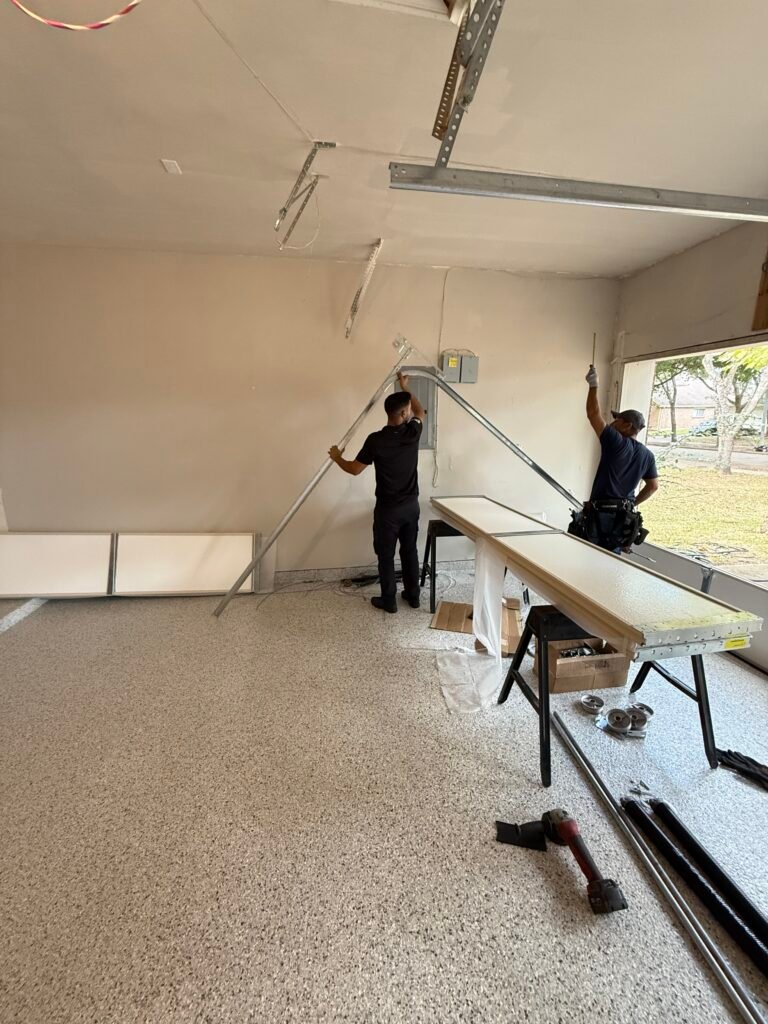
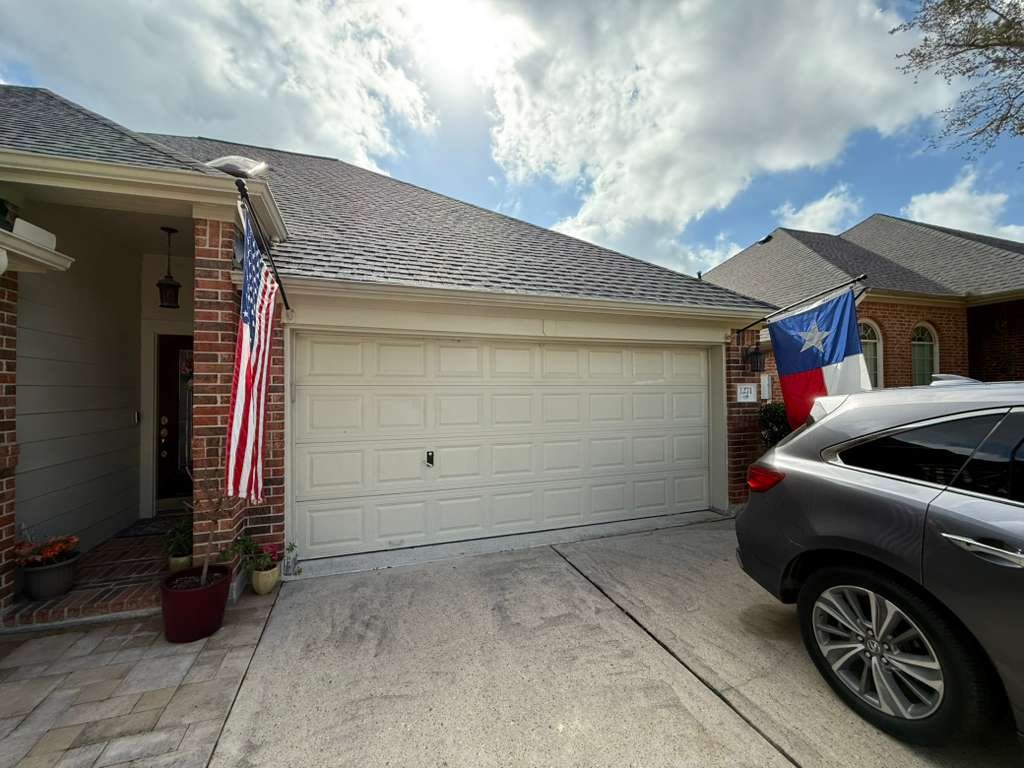
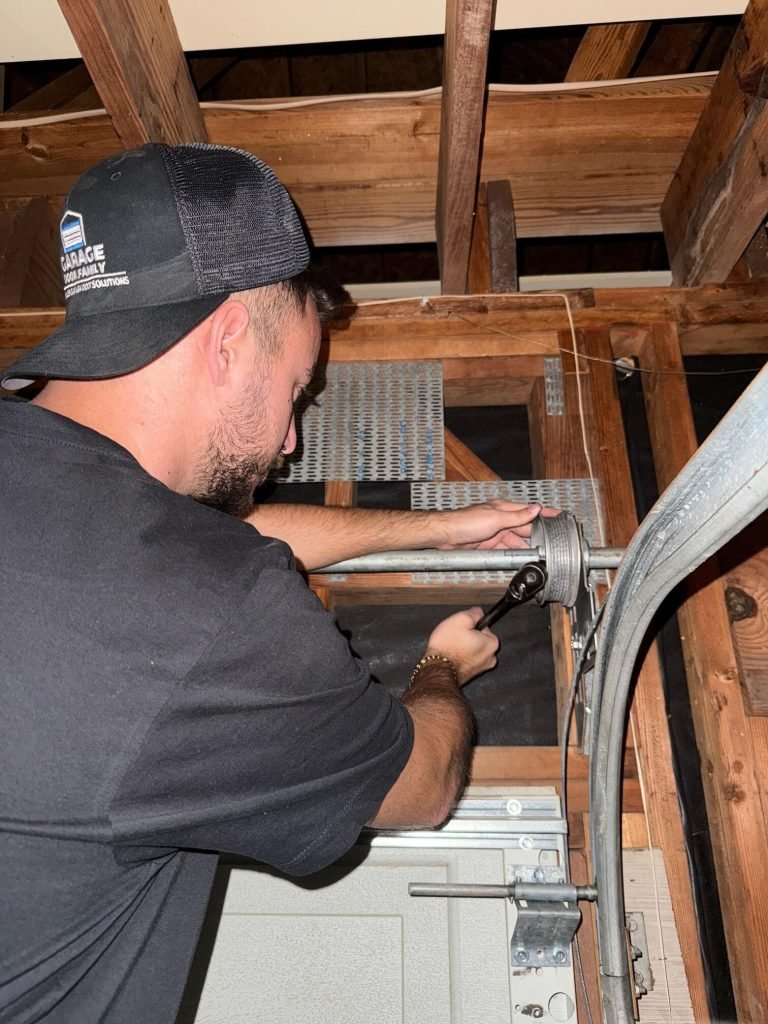
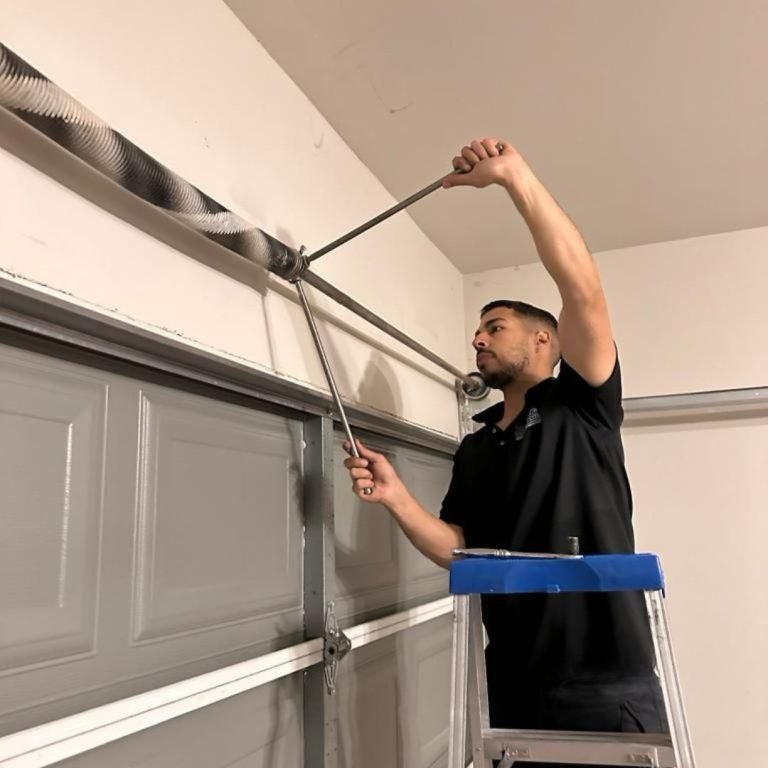
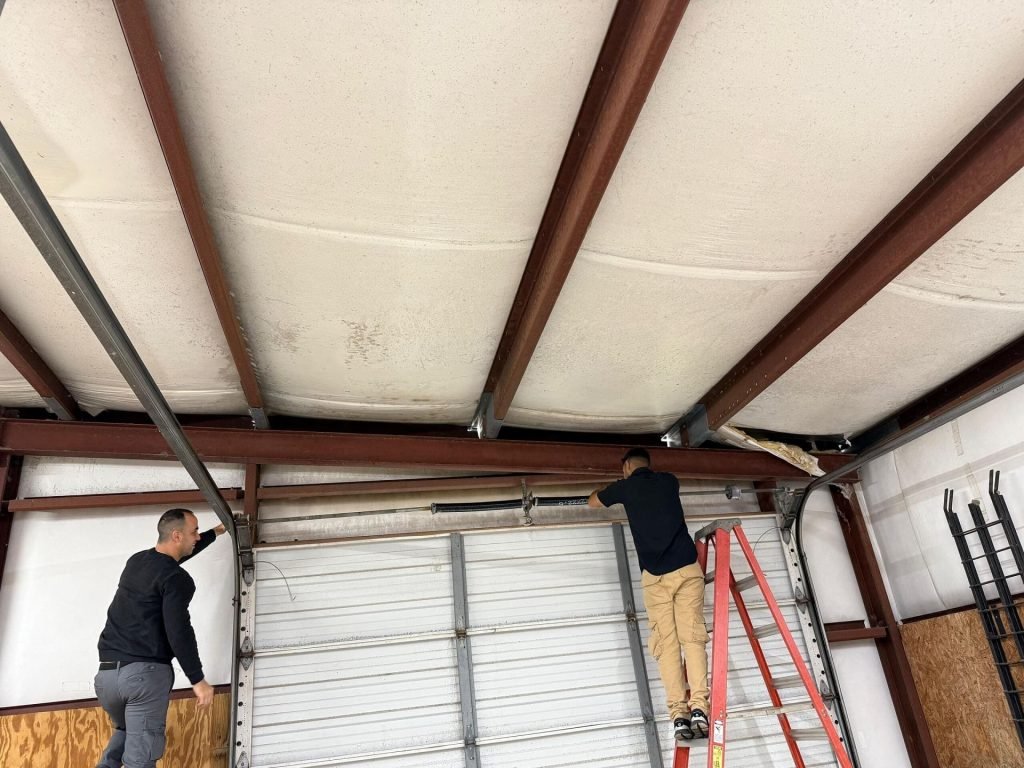
Photos from our own calls around the metro. Nothing here came from a stock library.

How the Visit Goes
You call
A person picks up, day or night. Say what the door is doing and roughly where in Sugar Land you are.
You get a real window
Same-day on most calls — it’s a short run down the Grand Parkway from the office, so Sugar Land is one of the earlier stops on the board.
You get a number
A firm price before any work starts. Free estimate, no service-call charge, no obligation to go ahead.
It gets fixed
Usually the same visit, because the common parts are already on the truck. We balance the door, test the safety reverse, and clear up.
5.0 on Google
“Amazing service. They were able to identify the problem that another company couldn’t. Awesome job!”
Google review
“Great price — Fast, reliable, and very affordable! Our garage door spring broke unexpectedly, and Izzy, the owner came out the same day. Fixed the issue quickly and the price was very reasonable and lower than other companies. Highly recommend this company to anyone needing quick and honest repair work!”
Google review
“Yoel came out on a Sunday about an hour after I called. My garage door was stuck halfway open and he fixed the problem in about 45 minutes. He was professional, quick, and knew exactly what he was doing. The price was very reasonable. Now my garage closes properly again and my family feels safe. Highly recommend.”
Google review
Sugar Land Questions
+How soon can you get to Sugar Land?
Yes, on most calls. The office is on Kingsland Blvd in Katy, so it is a short run down the Grand Parkway and Sugar Land is one of the closer places we cover — which usually means an earlier slot rather than a late one.
You will still get a real window on the phone rather than a vague promise, and we hold to it.
+My door has started binding on one side and it got worse over a year. What is that?
Usually the opening rather than the door. Fort Bend sits on clay that swells in the wet and shrinks in the dry, and a slab that has moved takes the door frame with it. The door is still square; the hole it runs in is not. So it drags on one jamb and the gap opens on the other. The fix is re-plumbing the track and resetting the hardware to where the opening is now, not a new door.
+What are the older First Colony and Sugar Creek doors like by now?
Near the end of their run, mostly. A lot of that housing went up in the eighties, which puts those doors past thirty years old. The springs have usually been changed once or twice, but the sections, hinges and track are original, and that is the point where a repair starts propping up a door that is going anyway. We will tell you when that is what we are looking at rather than sell you the repair twice.
+My HOA has rules about how the front of the house looks. Does that affect a new door?
Often, yes, and it is worth settling before anything is ordered. Several Sugar Land neighbourhoods run architectural review on anything that changes a street-facing elevation, and the garage door is the biggest flat surface on most houses here. Colour, panel style and window inserts are the usual conditions. A repair almost never needs approval; a replacement door usually does.
+My springs run along the tracks at the sides, not on a bar above the door. Is that a problem?
Those are extension springs and they are normal on a door of that age. The thing to look for is whether a thin safety cable runs through the middle of each spring. Without one, a spring that lets go becomes a length of steel travelling across the garage at speed. If yours has no containment cables we will fit them, and it is not an expensive job.
+Our door is only a few years old. What goes wrong that soon?
Wear parts, nearly always. Rollers are the first thing to get noisy, safety sensors drift out of alignment, opener gears strip, and a cable can come off a drum after a hard stop. The one worth asking about is balance: a door that is out of balance makes the opener carry weight it was never meant to, and it quietly shortens the life of everything else attached to it.
+Do you charge to come out and look?
No. The estimate is free and there is no service-call charge. A technician looks at the door, tells you what failed and what it takes to fix, and you decide with a firm number in front of you. If you would rather not go ahead, there is nothing to pay for the visit.
+Is the work covered by a warranty?
Five years on parts, ninety days on workmanship. If a part we fitted fails inside five years the replacement part is covered. The ninety days covers how it was fitted — if something is not right, we come back and put it right.
Sugar Land Door Dragging? Let’s Look.
Tell us what it’s doing. Free estimate, no service-call charge, and a window we can actually hold.
Across Sugar Land and Into Fort Bend
From Sugar Creek and Settlers Way through First Colony, Colony Bend, New Territory and Commonwealth, out east to Telfair, Riverstone, Imperial and Avalon, and on into Missouri City, Stafford, Greatwood and Richmond. If you’re on the edge of that and not sure, call and ask — we’ll tell you straight rather than sending someone an hour late. See the whole service area →