
Garage Door Cable & Drum Repair
A door hanging crooked, a cable gone slack, or strands starting to fray at the bottom bracket. Cables are the one part of the system that usually warns you before it breaks — and the one worth catching early.
What the Cables and Drums Actually Do
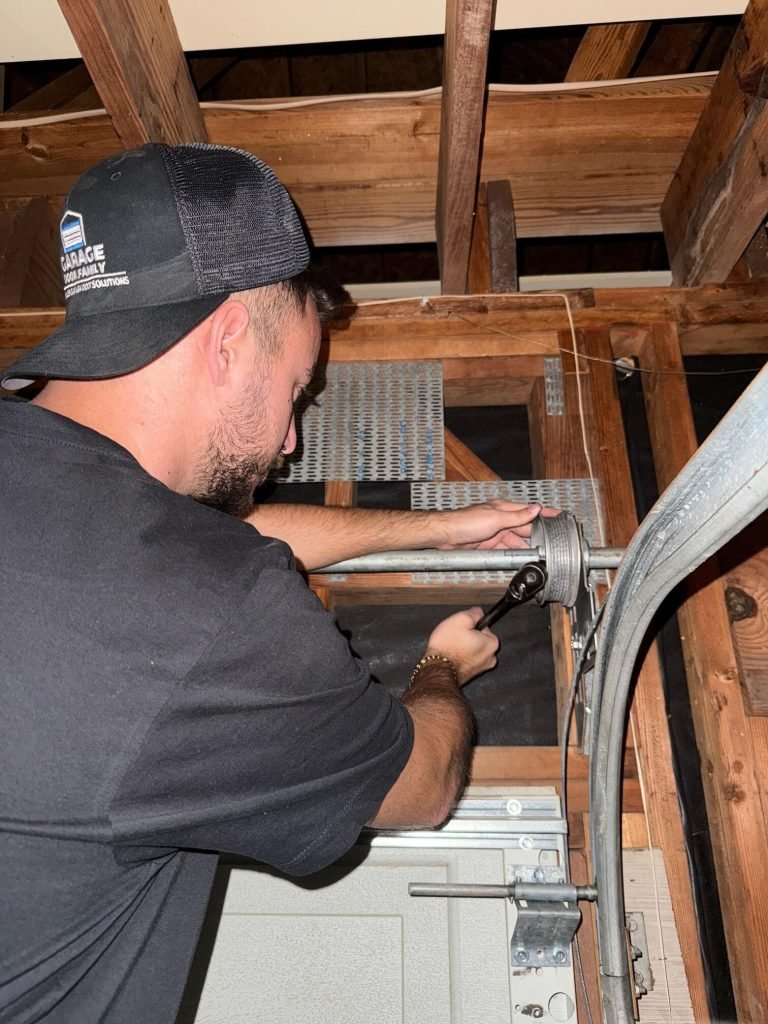
There is a steel shaft running along the wall above your door with the springs on it. At each end of that shaft sits a grooved wheel — the drum. A steel lift cable runs from a bracket at the bottom corner of the door, straight up, and winds onto that drum.
When the spring turns the shaft, the drums wind the cables and the cables pull the door up. The spring carries the weight; the cables deliver it. That is the whole system, and it is why the two cables have to match each other exactly: same length, same wear, same number of turns on the drum. The moment one side pulls differently from the other, the door starts going up crooked.
Why This Page Is Different From the Other Two
A spring fails suddenly — a bang, and the door is dead that morning. A door coming off its track is usually the consequence of something else letting go. Cables are the odd one out: they almost always fail slowly and visibly. Strands break one at a time over months, and the cable goes furry before it goes altogether.
That makes this the one failure in the system a homeowner can genuinely catch early. It takes about ten seconds to look at, and it is the difference between a straightforward cable job and a door that has come down hard on one side.
Six Things to Look For
The first two are the ones worth knowing. You can check them from the doorway without touching anything.
The cable looks furry
Run your eye — not your hand — down the cable at each bottom corner. A healthy cable is a tight, smooth twist. One that is failing has individual strands standing proud of it, like a frayed bootlace. That is the early warning, and it is worth acting on.
Rust at the bottom bracket
The lowest few inches of cable sit where the driveway drains and stay damp long after the rest of the garage has dried out. Orange staining at the bracket means the cable is corroding from the end up, usually well before anything looks obviously wrong higher up.
One corner sits lower
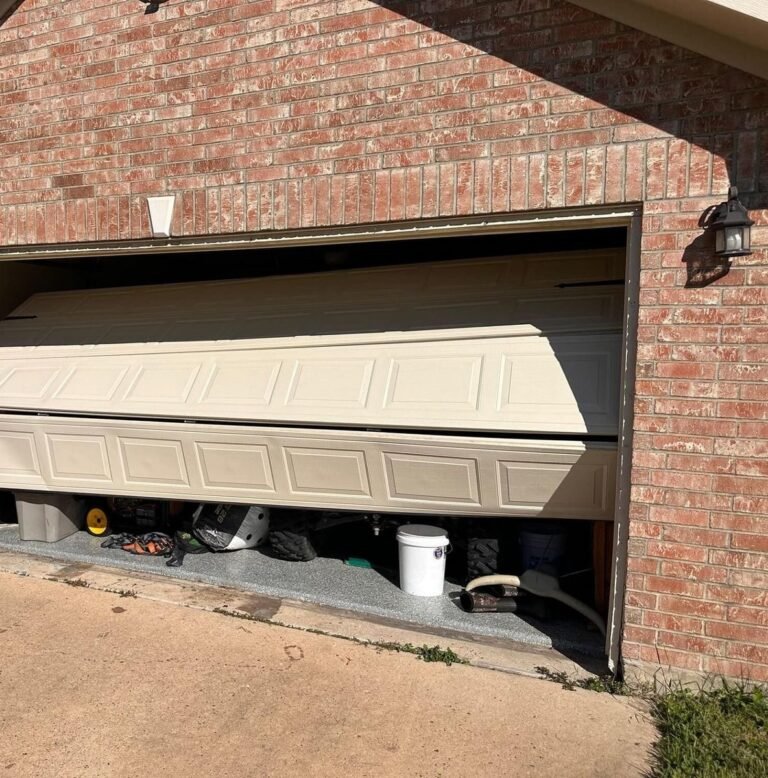
Close the door and look at the gap along the floor. A wedge of daylight down one side, or one bottom corner sitting an inch or more below the other, means the two sides are no longer pulling the same — a stretched cable, a slipped drum, or one cable already gone.
Slack cable hanging loose
A cable coiled on the garage floor, looped over the shaft, or hanging with no tension in it has come off its drum. Once it is out of the grooves it jams between the drum and the end plate, and the door will not run straight until it is re-seated.
Grinding from a top corner
A cable riding over a worn groove, or wrapping over itself on the drum, makes a rough grinding or popping noise from up near the shaft rather than from the door itself. It usually gets louder over a few weeks.
The door lurched on one side
A bang followed by the door dropping several inches at one corner and stopping at an angle is a cable letting go under load. Don’t press the button again — that is the moment the door twists out of its tracks.
What It Looks Like on the Truck
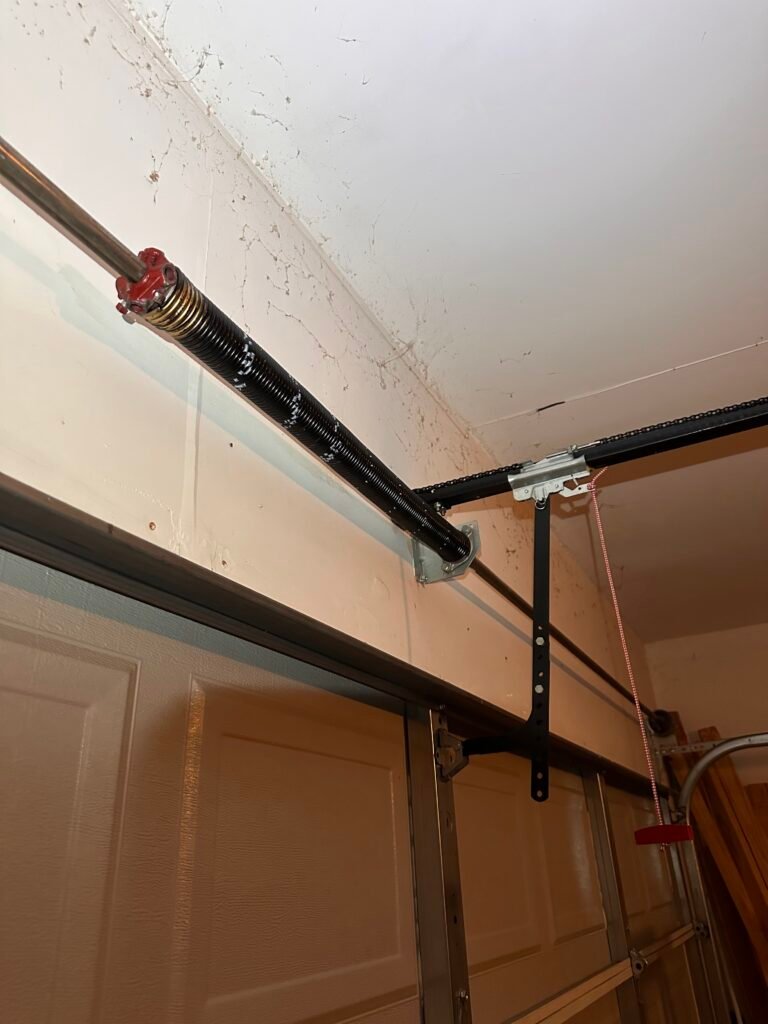
Real calls, real garages. Nothing here came from a stock library.
Humidity, Salt and Why Cables Go Early Here
Cable life is measured in cycles, but around Houston it is shortened by water. The bottom bracket is the lowest point in the whole assembly and it sits exactly where a driveway drains. After a storm the cable end stays wet for days in a closed garage. Galvanised cable handles that well — but the cut end at the bracket is bare steel, and that is where the rust starts and works upward.
On the coast it is faster again. In Galveston and on the bay side of League City, salt in the air attacks plated hardware continuously, and cables that would last years inland start showing rust at the bracket much sooner. We fit galvanised aircraft cable there as standard and check the drums and bottom brackets at the same time, because replacing a cable and leaving a corroded bracket behind just moves the problem.
Wherever you are, if you want to know whether we come out to you, the list is on Areas We Serve.
Rust at the bracket is the kind of thing a garage door tune-up catches early, because the cables, drums and bottom brackets are on the checklist. And if the cable let go because a spring broke first, that’s garage door spring repair in Katy.
How the Visit Goes
You call
A person picks up, day or night. Tell us which corner is low and whether you can see slack cable, and we’ll usually know what failed before anyone drives out.
We come out
Same day in most of the service area. The technician releases the tension safely before anything else happens — the shaft is still loaded even with a cable gone.
You get a number
A firm price before any work starts, including whether the drums are being reused or replaced and why. Free estimate, no service-call charge, no obligation.
It gets fixed
Usually about an hour. New cables in pairs, drums cleaned or replaced, both sides wound to match, then the door balanced and the safety reverse tested.
5.0 on Google
“Thanks for coming very fast, tech Izzy replaced the spring cables and drums in less than an hour price was reasonable thanks guys, would recommend to friends and family in Katy area”
Google review · Katy, TX
“Yoel came out on a Sunday about an hour after I called. My garage door was stuck halfway open and he fixed the problem in about 45 minutes. He was professional, quick, and knew exactly what he was doing. The price was very reasonable. Now my garage closes properly again and my family feels safe. Highly recommend.”
Google review
“Amazing service. They were able to identify the problem that another company couldn’t. Awesome job!”
Google review
Cable & Drum Questions We Get Daily
+How do I know if my garage door cable is broken?
The clearest sign is a door that sits crooked — one bottom corner an inch or more lower than the other, with a gap of daylight down one side. Look at the bottom corner brackets: a broken cable will be hanging slack, coiled on the floor, or wrapped around the shaft above. A cable that is fraying rather than snapped looks furry or fuzzy, with individual strands standing out of the twist. That one you can catch before it lets go.
+Can I replace just one cable?
No, and a company that offers to is cutting a corner. The two cables are the same age, have done the same number of cycles and have worn the same amount — if one has failed the other is close behind. They are also paired: a new cable on one side and a stretched one on the other pulls the door up crooked and starts wearing the tracks and rollers. We replace them in pairs, the same way we replace springs in pairs.
+Is a frayed cable dangerous?
Yes, and it is the one failure that usually gives you warning. The cable is what holds the door’s weight against the spring, so when strands are breaking the remaining ones are carrying more load and going faster. A door that comes down on a snapped cable drops on one side, twists in the tracks and can bend panels or catch whatever is underneath. If you can see fraying, stop using the door and call.
+Why did my cable come off the drum?
Almost always because the cable went slack and lost its grip on the grooves. That happens when a spring breaks and stops holding the door, when the door lands on something in its path and keeps unwinding, or when the door is left partly open for a long time. Once the cable is off the grooves it jams between the drum and the plate, and forcing the opener from there is what turns a cable job into a bent-panel job.
+Do the drums need replacing too?
Not always. Drums are grooved aluminium and they outlast cables comfortably, so on a lot of visits the cables are renewed and the drums are cleaned, re-seated and reused. They do get replaced when the grooves have worn round and no longer hold the cable, when a cable has cut a channel into the casting, or when the set screws have chewed the shaft and the drum has been slipping. The technician will show you the groove before recommending it.
+Can I use the door with a broken cable?
Don’t. With one cable gone the whole weight of the door is being carried on one side, which twists the door in its tracks and puts everything else — the other cable, the rollers, the brackets — under load it was not designed for. Pull the red release cord to disconnect the opener and leave the door down. If it is already stuck part-way open, leave it there rather than forcing it down.
+How long does cable and drum replacement take?
About an hour for a standard two-car door where the cables are being renewed and the drums re-seated. Longer if the door came off its tracks when the cable let go, because the sections have to be lifted back in and the door re-squared before anything is wound back on. Common cable sizes and drums are on the truck, so it is normally finished on the first visit.
+What makes cables rust so fast around Houston?
Standing water and humidity at the bottom of the door. The bottom bracket is the lowest point in the system, it sits where the driveway drains, and after rain it stays damp long after the rest of the garage has dried. Galvanised cable resists it, but the cut end at the bracket is bare steel and that is where rust starts. On the coast — Galveston and the bay side of League City — salt in the air accelerates the whole thing, which is why we fit galvanised aircraft cable there as standard.
Tell Us Which Corner Is Low
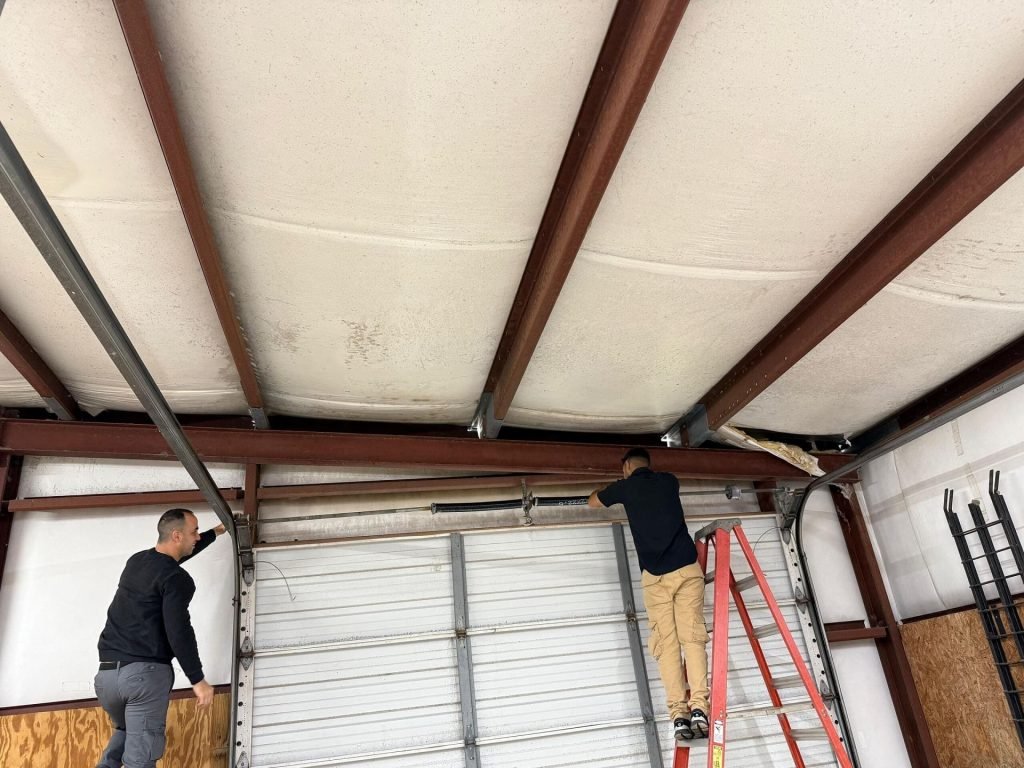
That one detail usually tells us what failed. Free estimate, no service-call charge, and a straight answer on how soon we can be there.
Request a Callback
Send your details and tell us which corner of the door is low. We’ll call you back to set a time. Prefer to talk it through now? Just call.