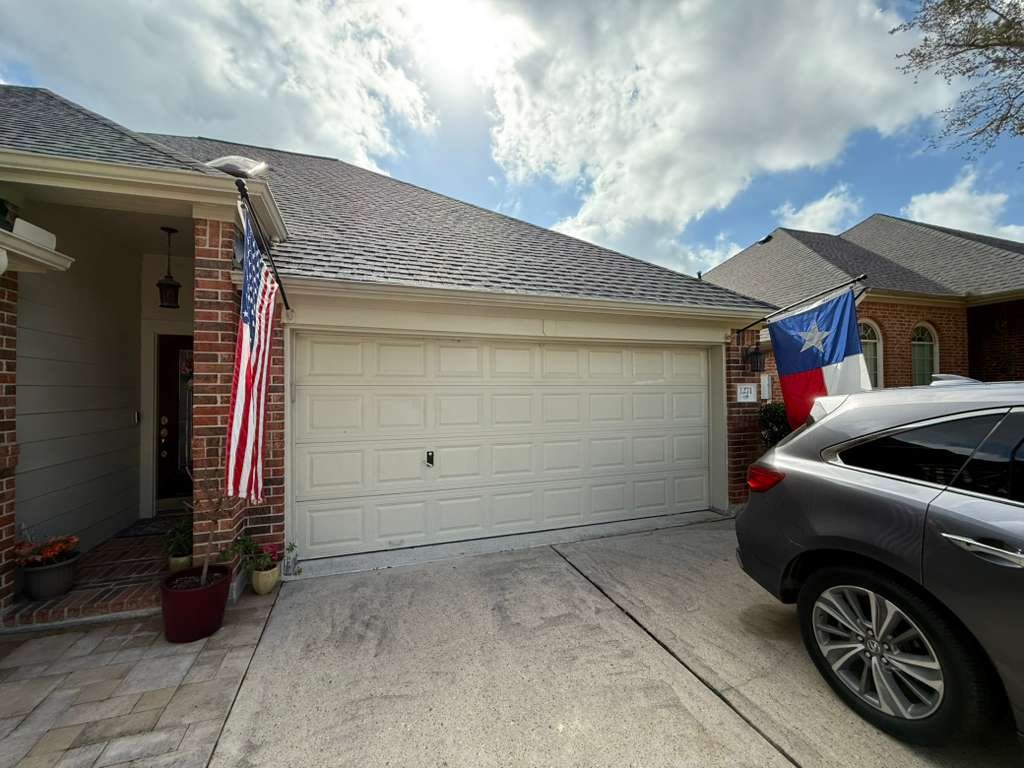
New Garage Door Installation
Panel folded by a car, rust through the bottom section, or a door that has had its last repair. We measure the opening, the headroom and the backroom, and quote a door that fits — with the track, the rollers and a spring wound for the new weight, not the old one.
Do You Actually Need a New Door?
Most doors get repaired. Find the one that sounds like yours — half of these belong on a different page.
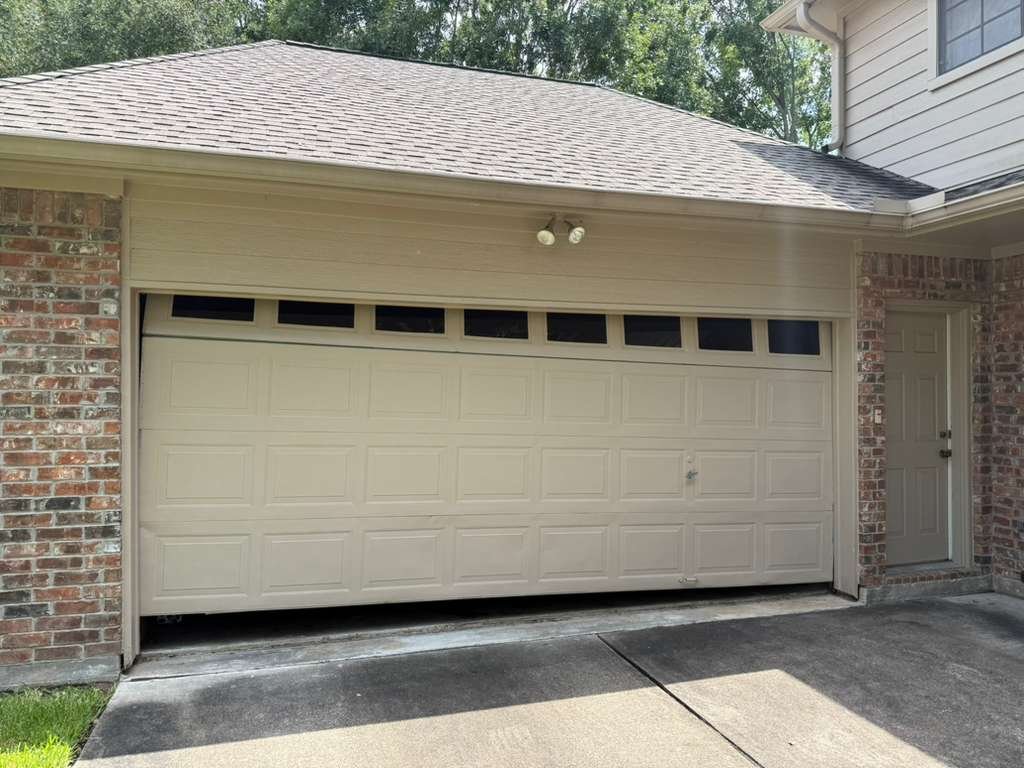
Somebody backed into it
The classic. If one section is folded and the rest is straight, a single-section swap is often possible and much cheaper than a whole door. It depends on whether the model and colour are still made — and on whether the impact bent the track too.
The bottom section is rusting through
Houston does this. Standing water on a driveway, a bottom seal that gave up years ago, and the bottom section rots from the inside out. Once the retainer that holds the seal has gone soft there is nothing left to bolt a new bottom bracket to.
It looks dated and you’re selling
A fair reason, and we won’t pretend otherwise. The door is a big share of what the front of a Houston tract house looks like from the kerb. A colour change and a window row is the cheapest visible thing you can do to it.
The garage is an oven in August
If the garage is a gym, a workshop or has a room over it, an insulated door is worth having. If it is somewhere you park the car and nothing else, save the money and read the insulation section below before you decide.
It came down hard and now it’s crooked
Usually a spring, a cable or a door out of its track — not a door that needs replacing. Get it looked at before you buy anything. Broken spring repair →
It’s noisy, slow, or it sticks
Almost always rollers, hinges, a chain that needs tension or an opener setting. Sections that are straight and solid do not need replacing because the door is loud. See repairs →
Repair Is Usually Cheaper. Here’s When It Isn’t.
Almost everything that goes wrong with a garage door is a wear part. Springs, cables, rollers, hinges, drums and openers all fail on a schedule, and replacing one costs a fraction of a new door fitted. If a company’s first answer to a broken spring is a new door, get a second opinion.
Replacement is the honest answer when the sections themselves are the problem. That means a panel folded by a car, rust eating through the bottom section, or a door with so many separate faults at once that you’d be buying a new door one part at a time and paying more for the privilege.
Age on its own is not a reason. A twenty-year-old steel door with straight sections and a sound bottom retainer is a perfectly good door that needs rollers.
Two things not to do
Don’t order a door off a tape measure. The width and height of the opening are only part of it. The headroom above the opening and the backroom behind it decide which track and which spring system will physically fit, and low-headroom garages are common in older and converted houses here. A door that arrives and won’t fit is a return, not an installation.
Don’t let anyone hang a new door on the old spring. A torsion spring is wound for one specific door weight. Put an insulated door on a spring sized for a single-skin one and it is out of balance from the first cycle — the opener carries weight it was never meant to, and both fail early.
What “A New Door” Actually Includes
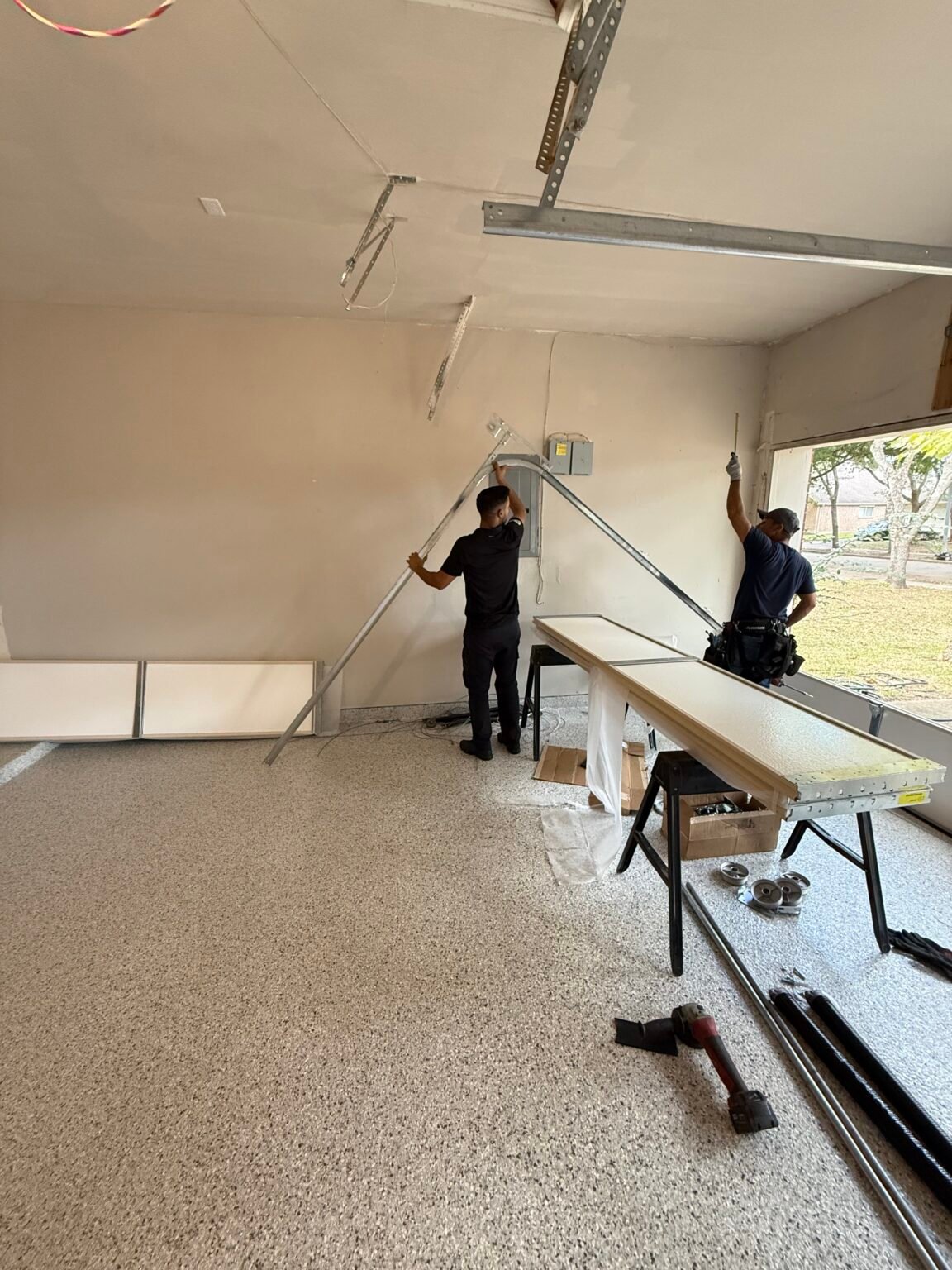
A proper installation is not just panels. What comes out and goes back in:
- The sections — the visible door, in the size, style and colour you picked.
- Vertical and horizontal track — matched to the headroom you actually have, not to a standard that assumes you have plenty.
- Rollers and hinges — new, and the roller choice is the single biggest thing you can do about how loud the door is.
- Cables and drums — sized to the door’s height so the door sits level when it lands.
- A torsion spring wound for the finished weight — the part most often carried over by somebody cutting a corner, and the reason a cheap install is expensive later.
- Bottom seal and retainer — the thing that keeps the water in the driveway rather than the garage, which matters more in this city than in most.
- The old door taken away. It does not get left leaning against the side of the house.
Steel, and Why Almost Everything Here Is Steel
Nearly every door we fit in Houston and Katy is steel, in one of three builds: single-skin (one layer, no insulation), a steel sandwich with a polystyrene board in it, or a steel sandwich with polyurethane foamed in place. Going up that list gets you a stiffer, quieter, better-insulated door and a heavier one.
Wood looks wonderful and it is a maintenance commitment in a climate that runs humid most of the year. Composite and faux-wood overlays give you the carriage-house look on a steel door without the refinishing. If you want real wood, say so and we’ll talk about what it needs.
Insulation, Honestly
The R-value printed on a door is the panel’s number, not the garage’s. Roughly: single-skin has no meaningful rating, polystyrene sits around R-6 to R-9, and polyurethane runs about R-12 to R-18 depending on how thick the section is. Those are the manufacturers’ figures for the section on its own.
What that number does not account for is an uninsulated ceiling, an uninsulated wall to the house, a gap under a worn bottom seal, or a garage that is vented to outside by design. Fit an R-18 door to a garage with all four and you will notice the difference, but not the difference on the sticker.
Our honest rule: if the garage is a gym, a workshop, a laundry, or has a bedroom over the top of it, insulation earns its keep here. If it is where the car sleeps, a single-skin steel door is not the wrong answer. Insulated doors are also noticeably quieter, which is the benefit people actually notice first.
Sizes, Headroom and Backroom
Around Houston and Katy the common openings are 8×7 and 16×7 on older tract homes, and 9×8 and 18×8 on the newer builds out past the Grand Parkway. Two singles instead of one double is common on garages built side-entry.
The measurement that catches people out is headroom — the gap between the top of the opening and the ceiling. Standard track wants around twelve inches. Less than that and it is low-headroom track, which exists and works but has to be specified before the door is ordered. We measure the opening, the headroom, the backroom and the side room on the estimate visit, and the quote is built from those numbers.
Windstorm Country Starts South of Us
The garage door is usually the largest opening in the house, which is why it is the one that gets the wind-load question. Whether it applies to you depends on the address: the Texas Windstorm Insurance Association covers the fourteen seacoast counties plus the part of Harris County east of State Highway 146.
So a Galveston or League City door is a different conversation from a Katy one, and your insurer may have a view even where the county doesn’t. Tell us the address when you call and we’ll tell you whether it is a question for your build before you pick a door.
Your Opener Probably Stays
A healthy opener carries over to the new door. What changes is the spring, because the new door weighs something different, and the travel and force limits, which get reset to the new door’s height. We test the safety reverse before we leave, every time.
The exception is an opener that was already on its way out, or one with no photo eyes at all — which dates it to before 1993 and makes it worth replacing while the garage is already open. Opener repair and replacement →
What It Costs
The estimate is free and there is no service-call charge. A technician measures, looks at what is there now, and gives you a firm number with the door, the track, the spring and the labour in it — not a range that moves on installation day.
We don’t publish door prices. A non-insulated single-skin 8×7 and an insulated carriage-house 18×8 are different orders of magnitude, and a figure quoted before anyone has measured is either a guess or a starting price that climbs.
On timing: common sizes in common colours are usually available quickly, and anything special-order gets a firm date before you commit to it. Parts carry a 5-year warranty and our workmanship is covered for 90 days.
Doors We’ve Fitted
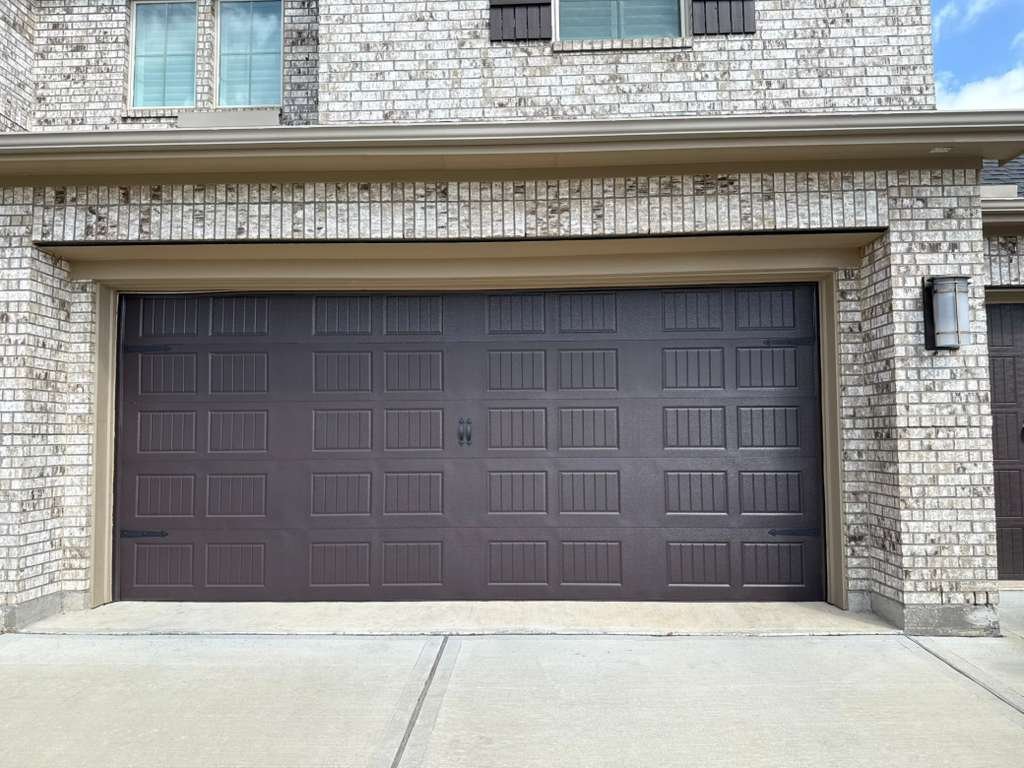
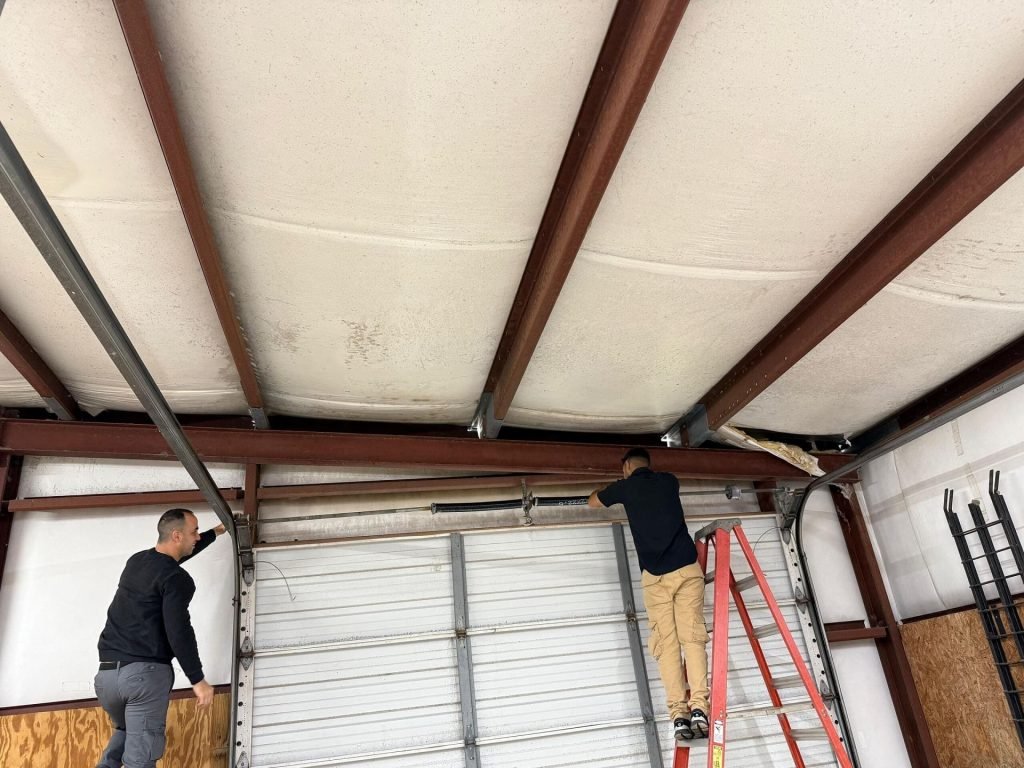
Every photo here is GDF’s own. Nothing came from a stock library or a manufacturer’s brochure.

How the Job Goes
You call
A person picks up, day or night. Tell us roughly how wide the opening is and what’s wrong with the door that’s on it.
We measure
Opening, headroom, backroom, side room. You see doors, colours and window options, and get a firm number with everything in it.
The door comes in
Common sizes and colours are usually quick. Anything special-order gets a date before you commit to it.
Fitting day
Most of a day for a double. Old door hauled away, spring wound to the new weight, door balanced, opener limits and safety reverse tested.
5.0 on Google
“Yoel came out on a Sunday about an hour after I called. My garage door was stuck halfway open and he fixed the problem in about 45 minutes. He was professional, quick, and knew exactly what he was doing. The price was very reasonable. Now my garage closes properly again and my family feels safe. Highly recommend.”
Google review
“Amazing service. They were able to identify the problem that another company couldn’t. Awesome job!”
Google review
“Thanks for coming very fast, tech Izzy replaced the spring cables and drums in less than an hour price was reasonable thanks guys, would recommend to friends and family in Katy area”
Google review · Katy, TX
Installation Questions
+Should I repair my garage door or replace it?
Most doors get repaired. Springs, cables, rollers, hinges and openers are wear parts, and replacing them is a fraction of a new door fitted.
Replacement is the honest answer when the sections themselves are the problem: a panel folded by a car, rust eating through the bottom section, or a door with so many separate faults that you would be paying for a new door one part at a time. We tell you which of those you have before you spend anything, and we will say so if a repair is the better buy.
+Can you replace just the one damaged panel?
Sometimes, and it is worth asking. If the door is a current model from a manufacturer still making that section in that colour, a single-section swap is a real option and much cheaper than a whole door.
It stops being an option when the model is discontinued, when the colour has faded away from anything still sold, or when the impact that bent the panel also twisted the track and the rollers. We check the section stamp on site before quoting either way.
+Does a new garage door come with new springs and track?
Yes, and it has to. A torsion spring is wound for one specific door weight, so an insulated door hung on the spring that used to carry a single-skin one is out of balance from the first cycle and wears out the opener.
A proper installation is new sections, new track, new rollers, new hinges, new cables and drums, a new bottom seal and a spring sized to the finished door. The existing opener usually stays if it is healthy.
+Is an insulated garage door worth it in Houston?
It depends on what the garage is. If it is a west-facing box you park in and nothing more, a non-insulated steel door is fine. If there is a gym, a workshop, a freezer or a room over the top of it, insulation changes how the space feels in August and takes the drumming noise out of the door.
Be careful how you read the R-value: it is the panel’s number, not the garage’s, and an uninsulated ceiling or a worn bottom seal will undo most of it.
+What size garage door do I need?
Around Houston and Katy the common openings are 8×7 and 16×7 on older tract homes and 9×8 and 18×8 on newer builds. Do not order from a tape measure alone.
The opening is only half of it: the headroom above it and the backroom behind it decide which track and which spring system will physically fit, and low-headroom garages are common in converted and older houses. We measure all three on the estimate visit.
+Do I need a wind-rated garage door?
It depends where you are and who insures you. The Texas Windstorm Insurance Association covers the fourteen seacoast counties plus the part of Harris County east of State Highway 146, so a Galveston or League City address is in a different conversation from a Katy one.
A garage door is usually the largest opening in the house, which is why it is the one that gets asked about. Tell us the address when you call and we will tell you whether it is a question for your build.
+How long does a garage door installation take?
The fitting itself is most of a day for a standard double door, and a single is quicker. Two people take the old door and track out, hang the new sections, run the track, wind the spring, balance the door and set the opener limits and safety reverse before they leave.
The part that varies is getting the door, not fitting it: common sizes in common colours are usually available quickly, and anything special-order gets a firm date before you commit to it.
+Do you charge to come out and quote a new door?
No. The estimate is free and there is no service-call charge. A technician measures the opening, the headroom and the backroom, looks at what is there now, and gives you a firm number with the door, the track, the spring and the labour in it.
If you would rather not go ahead, there is nothing to pay for the visit. Parts carry a five-year warranty and workmanship is covered for ninety days.
Get It Measured Before You Get It Priced
Free estimate, no service-call charge, and a firm number with the door, the track and the spring in it. If a repair is the better buy, we’ll tell you.
Where We Fit Doors
We work out of Katy and cover the metro from Cinco Ranch and the Grand Parkway east through the Energy Corridor into Houston, north to Cypress and Magnolia, and south into Sugar Land, Richmond and down toward League City and Galveston. If you’re not sure whether you’re in range, call and ask — it’s a ten-second answer.