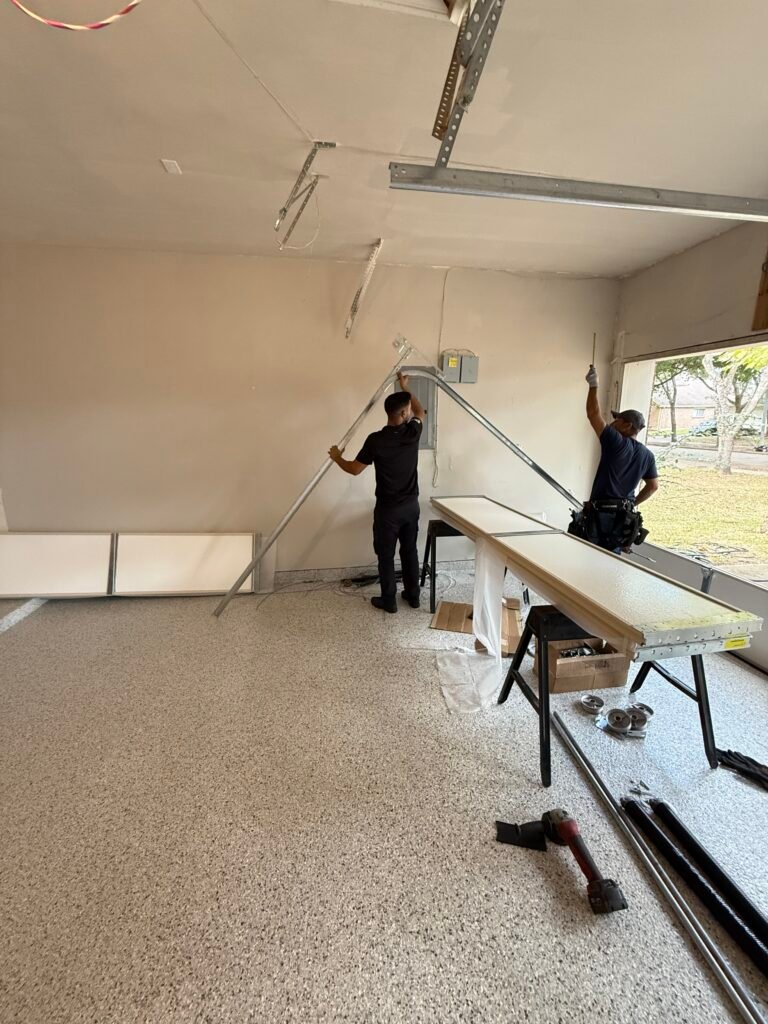
Garage Door Maintenance in Katy, TX
Your garage door is the heaviest moving thing in the house, and it goes up and down a few thousand times a year. A tune-up is an hour of someone checking the parts that fail before they fail. It’s cheaper than the bang.
Who Books a Tune-Up
Nothing has to be broken. Most people call because the door started acting a little different, and they’d rather find out why now than on a Monday morning with the car inside.
The door got loud
Grinding, squealing or a rattle that wasn’t there last year. Usually dry rollers and hinges, sometimes a worn roller bearing. Worth a look before it turns into a roller jumping the track.
It moves stiff or jerky
A door that shudders, hesitates or slows near the top is often out of balance. The opener ends up doing the spring’s job, and that wears out the opener’s gears.
It’s been a year or more
Nobody’s touched it since the house was built or since the last repair. Once a year is the normal interval. Gulf humidity in Katy rusts springs and dries out lube faster than the manuals assume.
You’d rather not wait for the bang
A spring doesn’t warn you by the calendar. A tune-up shows how worn the springs and cables are, so you can plan a replacement for a day that suits you. It won’t pick the worst possible morning.
What the Tune-Up Covers
Door and opener, top to bottom. If something is worn past saving, you’re told what it is and why, and you decide what happens next.
Balance
We take the opener off and lift the door by hand. A balanced door stays put halfway up. One that drops or flies up has springs that need adjusting or replacing.
Springs
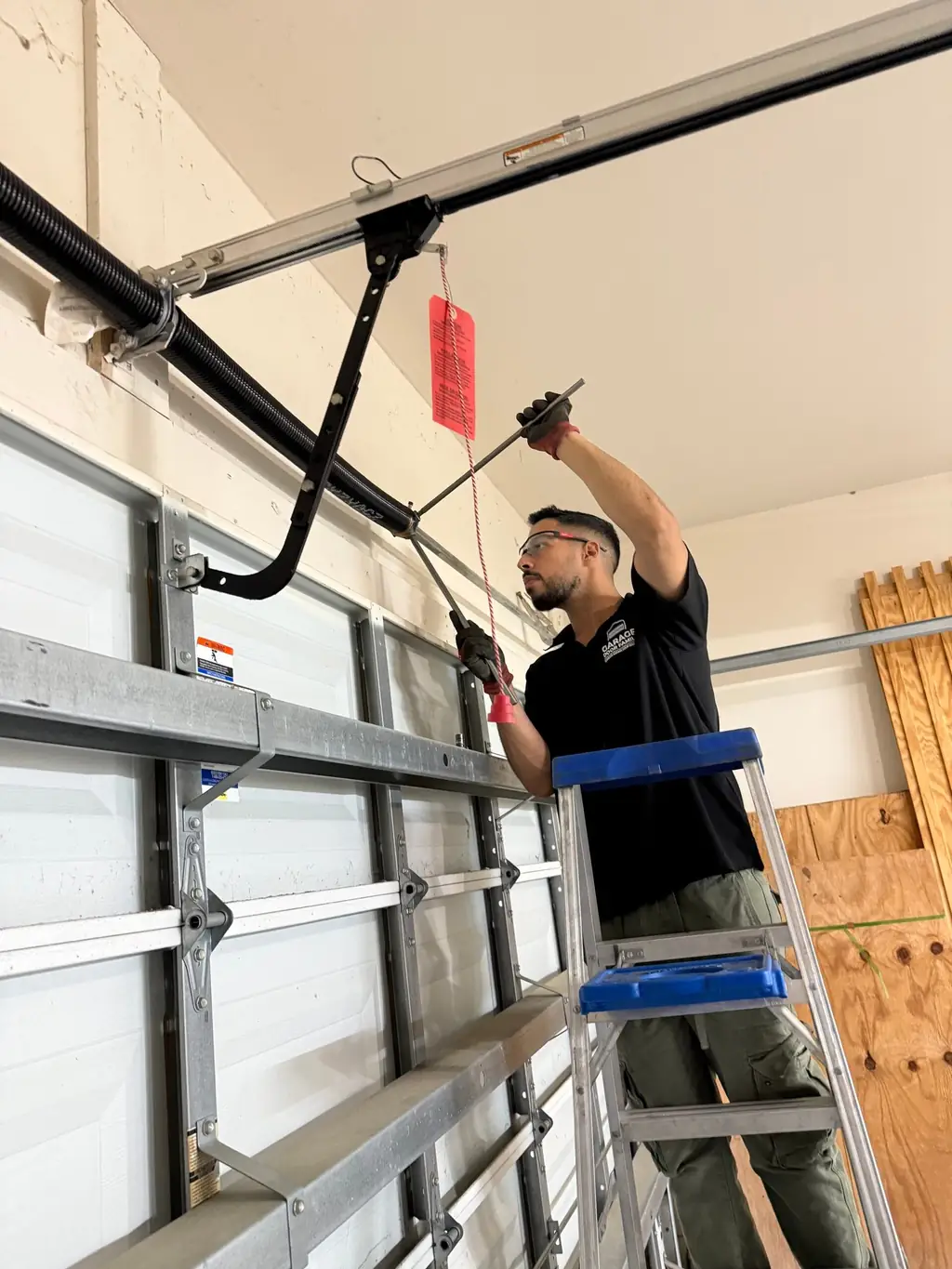
Checked for rust, gaps in the coil and lost tension. Torsion springs are adjusted only by a tech with the right bars, because they hold the whole weight of the door.
Rollers
Worn, cracked or wobbling rollers are the usual source of noise, and the usual reason a door comes off its track. We check every one.
Hinges
Cracked or loose hinges let the panels flex. We tighten what’s loose and point out any hinge that’s split.
Tracks
Checked for bends, loose brackets and alignment, then wiped clean. Tracks are cleaned, not greased. Grease in a track collects grit.
Cables & drums
Lift cables are checked for fraying and rust where they meet the bottom bracket, and for sitting right on the drums. A frayed cable is replaced, not lubricated.
Safety sensors
The two photo-eyes by the floor are cleaned, lined up and tested, so the door reverses when something breaks the beam.
Opener force & limits
The opener’s force and travel limits are set so the door closes fully without slamming, and the auto-reverse is tested with an object on the floor.
Lubrication
Springs, hinges, roller bearings and the opener rail get a lubricant made for garage doors. Not WD-40, which is a cleaner and strips what little lube is left.
How Often Should a Garage Door Be Serviced?
Once a year for most houses. If the door is the front door, meaning the family goes in and out through the garage several times a day, twice a year is worth it. A spring is rated in cycles, not years, and a busy garage uses them up fast.
Between visits, the one check worth doing yourself is the sensor test: close the door and wave something through the beam. It should stop and go back up. If it doesn’t, stop using the opener and call.
The DIY Lube Problem
Lubing your own door is fine if you use the right stuff in the right places. Most of the noisy doors we see were lubed, just badly. WD-40 goes on the springs and cleans off the little lube that was there. Grease goes into the tracks and turns into grit paste. Oil goes onto nylon rollers that didn’t need it.
What you shouldn’t do yourself is touch the springs, the cables or the bottom brackets. They’re under enough tension to break a wrist. That part is what a tune-up is for.
When Repair Beats Maintenance
A tune-up keeps a working door working. It doesn’t fix a broken one, and some faults shouldn’t wait for a scheduled visit:
- A snapped spring. A loud bang, a gap in the coil, and a door the opener can’t lift. See garage door spring repair in Katy.
- A frayed or loose cable. Don’t run the door. A cable that lets go on one side tilts the door and can pull it off the track. See cable and drum repair.
- A door off its track. Rollers out of the rail, a crooked or hanging door. Leave it where it is. See off-track repair.
For anything else that’s actually broken, the Katy garage door repair page has the full list. If we find one of these on a tune-up, we’ll tell you on the spot. The trucks carry springs, cables, drums, rollers and sensors, so it’s usually fixed the same visit if you want it done.
What It Costs
You get the price before any work starts. We don’t quote parts sight-unseen, because a tune-up that turns up a worn spring is a different visit from one that doesn’t. The repair cost page explains what sets the number, and tune-ups are on the coupons page. Parts carry a five-year warranty, workmanship ninety days.
Business Doors Too
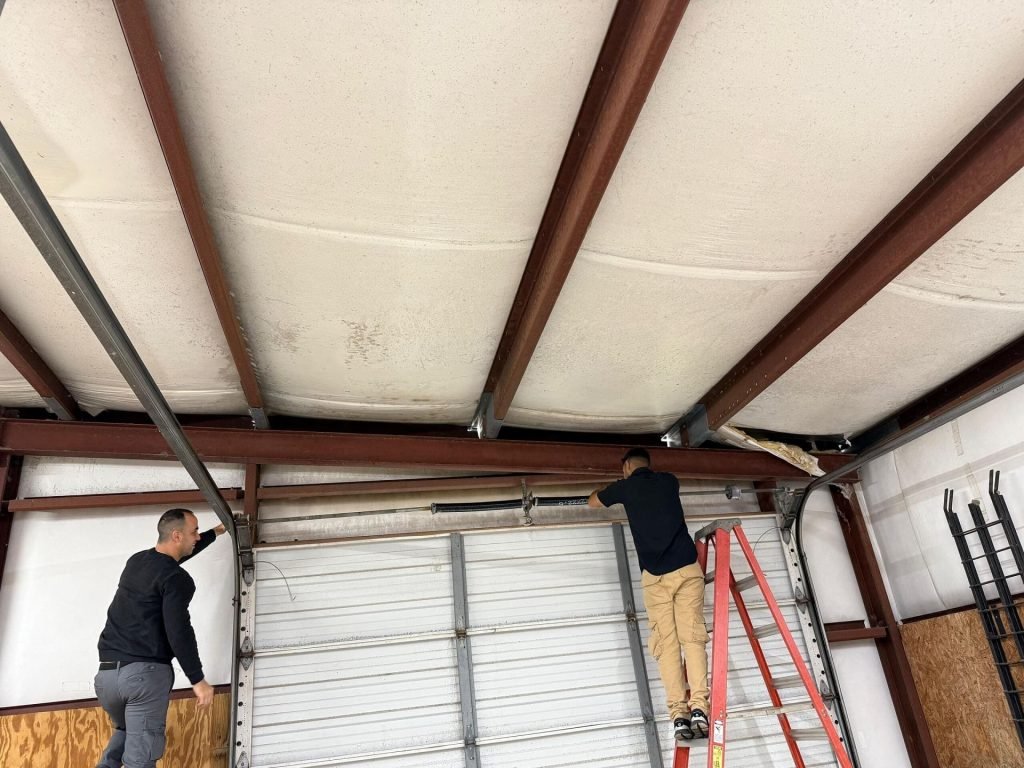
Shops, warehouses and units along the Katy Freeway and Grand Parkway have heavier sectional and rolling steel doors that run all day. They wear out faster than house doors and cost more when they stop. Planned maintenance on those is a separate job. See commercial garage door repair.
Maintenance Questions
+How often should a garage door get a tune-up?
Once a year for most homes. If the family uses the garage as the main way in and out, twice a year is worth it, because springs wear by the number of cycles, not by age.
Katy’s humidity is hard on springs and lube, so don’t stretch it much past a year.
+What’s included in a garage door tune-up?
Door balance, springs, rollers, hinges, tracks, cables and drums, the safety sensors, and the opener’s force and travel limits, including an auto-reverse test. Then the moving parts are lubed with a garage-door lubricant.
If something is worn past adjusting, you’re told what it is before anything is replaced.
+Can you come out the same day?
On most Katy calls, yes. Call (346) 998-5099. A person answers day or night. A tune-up isn’t urgent, so if you’d rather pick a day that suits you, say so and we’ll book it.
If the door has actually stopped working, tell us that. A broken door goes ahead of a tune-up.
+Can I just lube the door myself?
Yes, if you use a lubricant made for garage doors and keep it on the hinges, roller bearings and springs. Don’t use WD-40, which is a cleaner, and don’t grease the tracks, which just collects dirt.
Leave the springs, cables and bottom brackets alone beyond a spray of lube. They’re under serious tension, and adjusting them is a job for a tech with the right tools.
+My garage door is noisy. Does it need maintenance or a repair?
Usually maintenance. Squeaks and grinding are most often dry or worn rollers and hinges, and a tune-up sorts them out. A new noise that came with a bang, or a door that suddenly feels much heavier, is different. That’s usually a spring, and it’s a repair.
If you’re not sure, describe the noise when you call.
+My door reverses and the opener light blinks. What’s wrong?
Almost always the safety sensors, the two small eyes near the floor on either side of the door. Dirt on a lens, a bracket knocked out of line, or something parked in the beam will do it.
Wipe both lenses and check that nothing is in the way. If it still reverses, the sensors need lining up or replacing, and they’re checked on every tune-up.
+Is it the opener or the door?
Pull the release cord with the door fully closed and lift it by hand. If it’s heavy, sticks or won’t stay halfway up, the problem is the door, usually the springs or the balance. If the door moves easily by hand, the opener is the likelier culprit.
Don’t pull the release on a door that’s partway open. If a spring is broken, it can drop.
+Is there a warranty on parts and work?
Yes. Parts we fit carry a five-year warranty, and our workmanship is covered for ninety days. If a tune-up turns into a part replacement, that part comes with the same five years.
Get It Checked Before It Breaks.
A person answers, day or night. Price before any work starts, and a truck out of Katy.
Request a Callback
Send your details and say it’s for a tune-up. We’ll get back to you to book a time. Prefer to talk it through now? Just call.
Where We Do Tune-Ups
The trucks come out of our office on Kingsland Blvd in Katy, so Katy and Cinco Ranch are the shortest drives we have. Next town over, Fulshear is regular work too.
Further into the metro, maintenance is booked the same way. See the Houston garage door repair page for the full area.